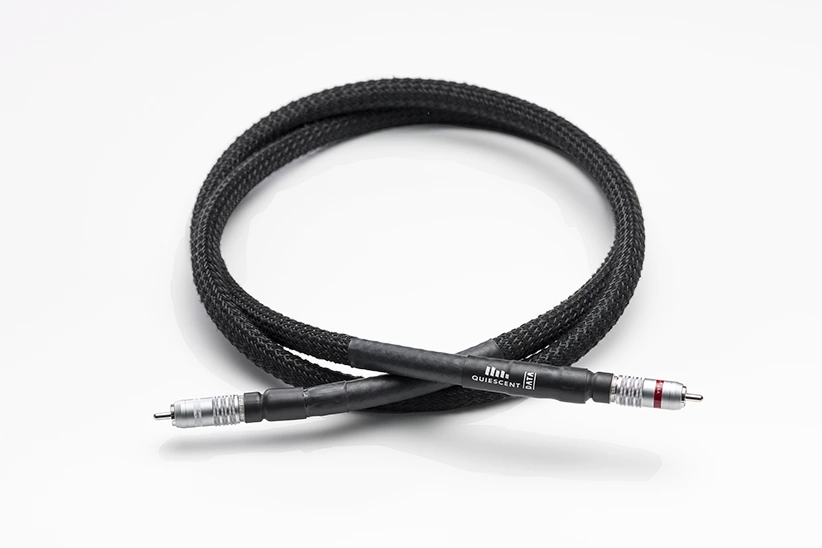
DATA Digital Interconnects
Digital interconnects engineered for quiet timing
DATA Digital Interconnects are designed to preserve the structure of a digital audio signal as it travels from source to DAC.
The data may be binary, but the signal that carries it is an analogue electrical event. Its edges, return path, and high-frequency energy are shaped by the cable in its role as a transmission line. Geometry, dielectric behaviour, shielding and termination determine whether that energy remains controlled or is reflected back into the system.
Quiescent applies matched-impedance construction and wideband absorption to reduce RF noise, edge uncertainty, and unwanted modulation, helping digital replay feel stable, spatially clear, and unforced.
Previous
Next
Performance
Digital performance is often described as if the data either arrives or it does not, but timing uncertainty at the interface can still matter. In a revealing audio system, the electrical conditions around each transition also matter. Timing recovery, RF behaviour, common-mode energy and ground interaction can all influence the environment in which the DAC has to work.
DATA Digital Interconnects are built to maintain a controlled impedance through the cable and termination, while absorbing high-frequency energy that would otherwise travel along the conductor, screen and dielectric structure.
The result is not a cable that imposes its own character. It is a quieter digital link, allowing timing, spatial placement and low-level information to emerge with greater composure.
Technology
At very high frequencies, a cable is no longer just a passive length of metal. It behaves as a distributed transmission line, with energy moving along conductor surfaces, shields and dielectric boundaries.
Quiescent cable manufacture uses that propagation behaviour deliberately. Conductor geometry, dielectric control, screen behaviour and termination are combined with proprietary EMI/RFI absorption, so unwanted high-frequency energy is encouraged to dissipate rather than reflect through the digital connection.
The aim is not to brighten, soften or editorialise the sound. It is to reduce the electrical conditions that can make digital replay feel less stable.
Specifications
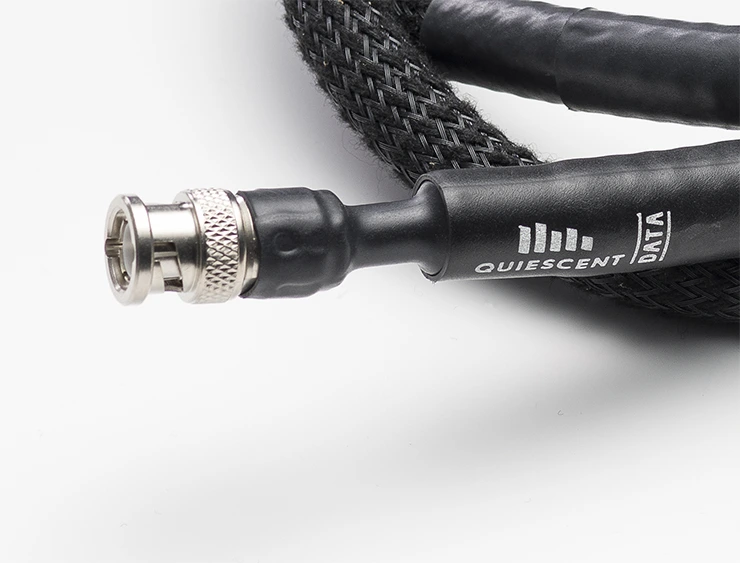
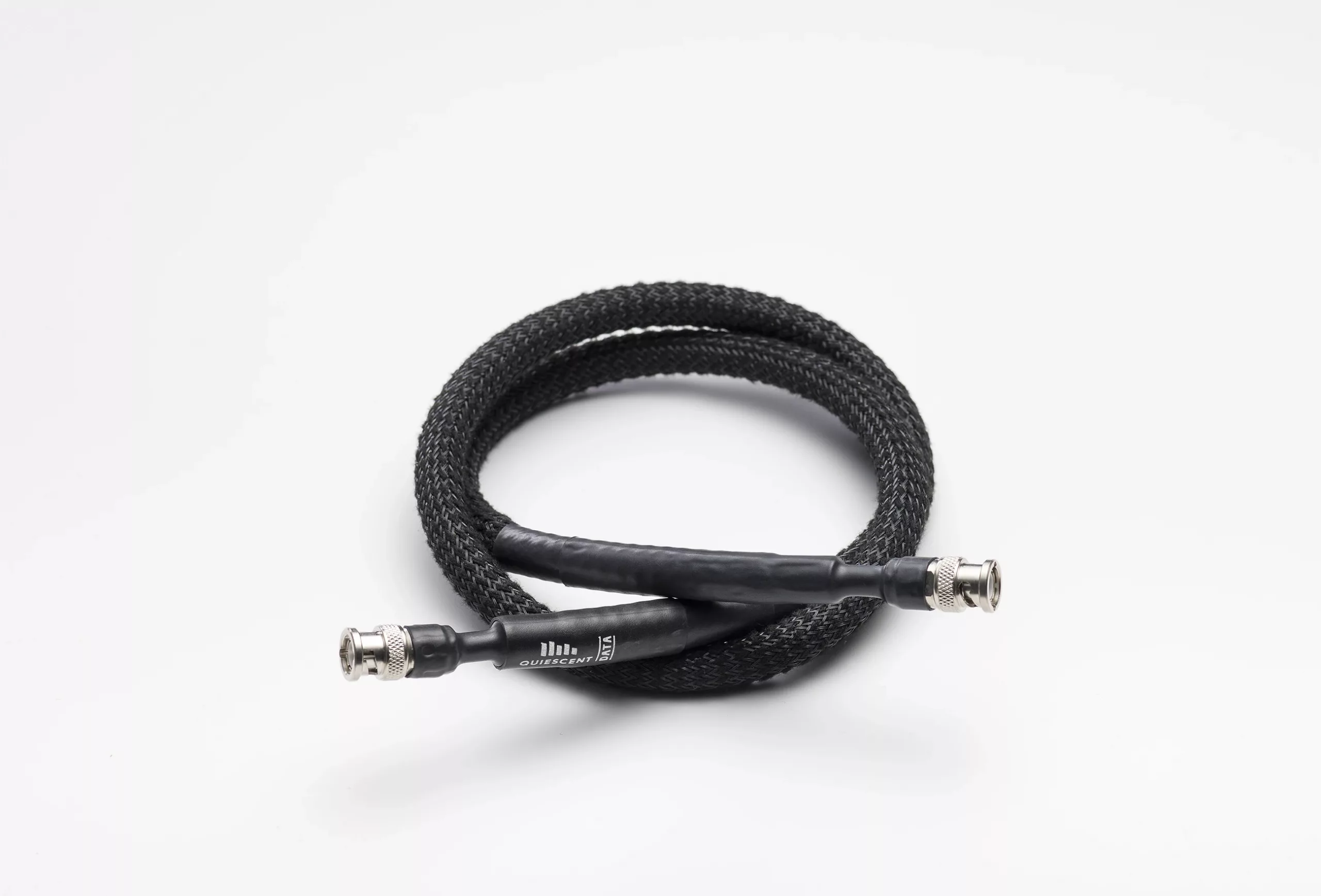
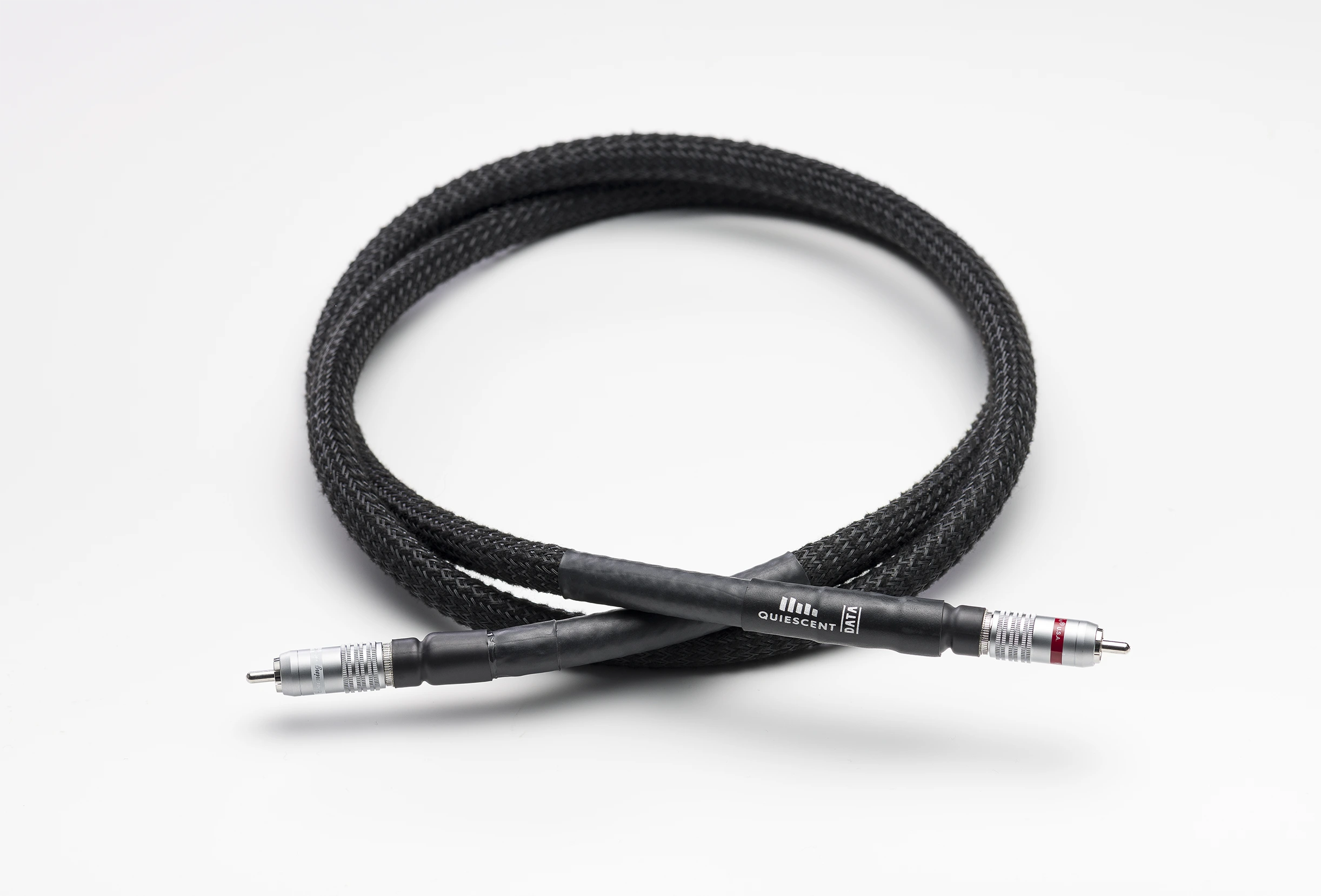
DATA Digital Interconnects use high-grade OCC copper conductors, controlled coaxial construction and carefully selected terminations for 75 ohm S/PDIF and clock connections, with 110 ohm AES/EBU available where required.
A proprietary wide-band EMI/RFI absorption structure runs along the cable, supported by low-loss insulation and an acoustic damping outer braid to control both electrical and mechanical energy along the transmission path.
Technology
A digital cable is still an analogue structure
Digital audio is carried by electrical waveforms. Although the information is encoded as data, the cable itself is asked to move fast transitions, return currents and high-frequency energy between two real electronic devices.
Those transitions are shaped by the physical cable: conductor geometry, dielectric properties, shield behaviour, connector quality and impedance continuity. When these factors are poorly controlled, unwanted energy can be stored, reflected or redistributed around the source, DAC and ground reference.
Transmission-line behaviour
At audio frequencies, propagation delay through a short cable is not a meaningful cause of musical timing error. At RF and millimetre-wave frequencies, the picture changes. The cable behaves as a distributed transmission line, and small impedance changes can affect how energy moves through the structure.
A well-designed digital interconnect therefore needs more than low resistance. It needs a stable characteristic impedance, consistent dielectric behaviour and terminations that preserve the intended transmission environment from one end of the cable to the other.
Absorption rather than reflection
Conventional shielding can reduce external interference, but a highly reflective shield does not destroy RF energy. It can redirect it along the screen, into the ground structure, or back toward sensitive electronics.
The Quiescent DATA Digital Interconnects use wide-band, multi-phase absorption to provide unwanted high-frequency energy with a more controlled destination. The proprietary absorption structure is intended to reduce RF propagation along the cable without placing treatment in the digital signal path.
Mechanical stability
A cable is also a physical object. Vibration, dielectric movement and small changes in conductor spacing can alter distributed capacitance and inductance. These effects are small, but at high frequencies they can contribute to time-domain instability and low-level modulation.
The acoustic damping outer braid is used to reduce the opportunity for mechanical energy to travel through the cable structure, supporting the electrical work done by the matched geometry and absorption system.
The listening result
The intended result is quietness without editorial character. Timing feels more settled. Images hold their position more naturally. Low-level information is easier to follow because the system is less occupied by energy that has no musical purpose.
The wider behaviour of high-frequency propagation through cables and connected electronics is explored in The Physics of Quiet.
Specifications
Conductors
Oxygen-free copper with coaxial outer sheath
Connectors
Clock/SPDIF
Silver plated BNC
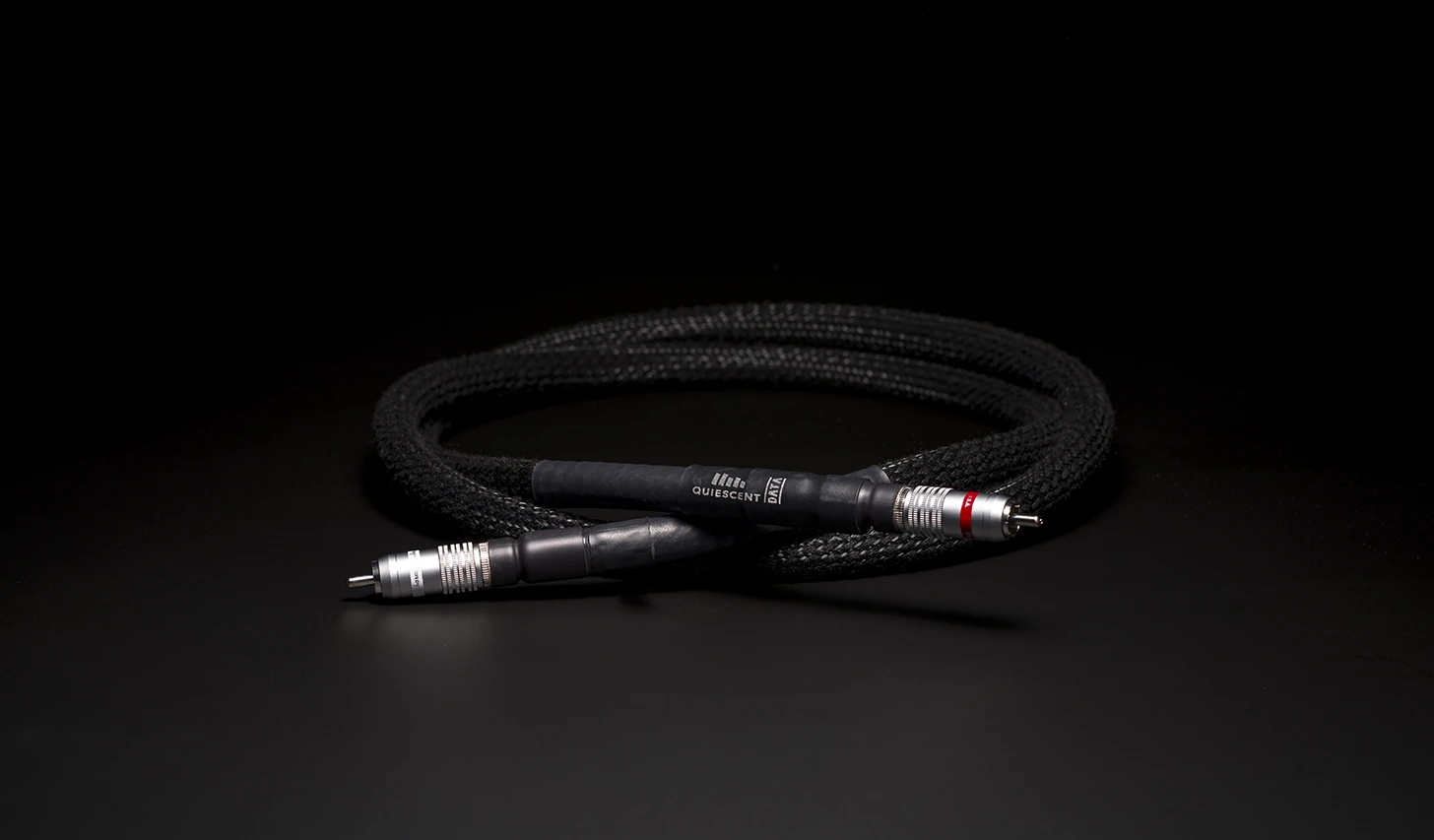
SPDIF
Rhodium plated RCA
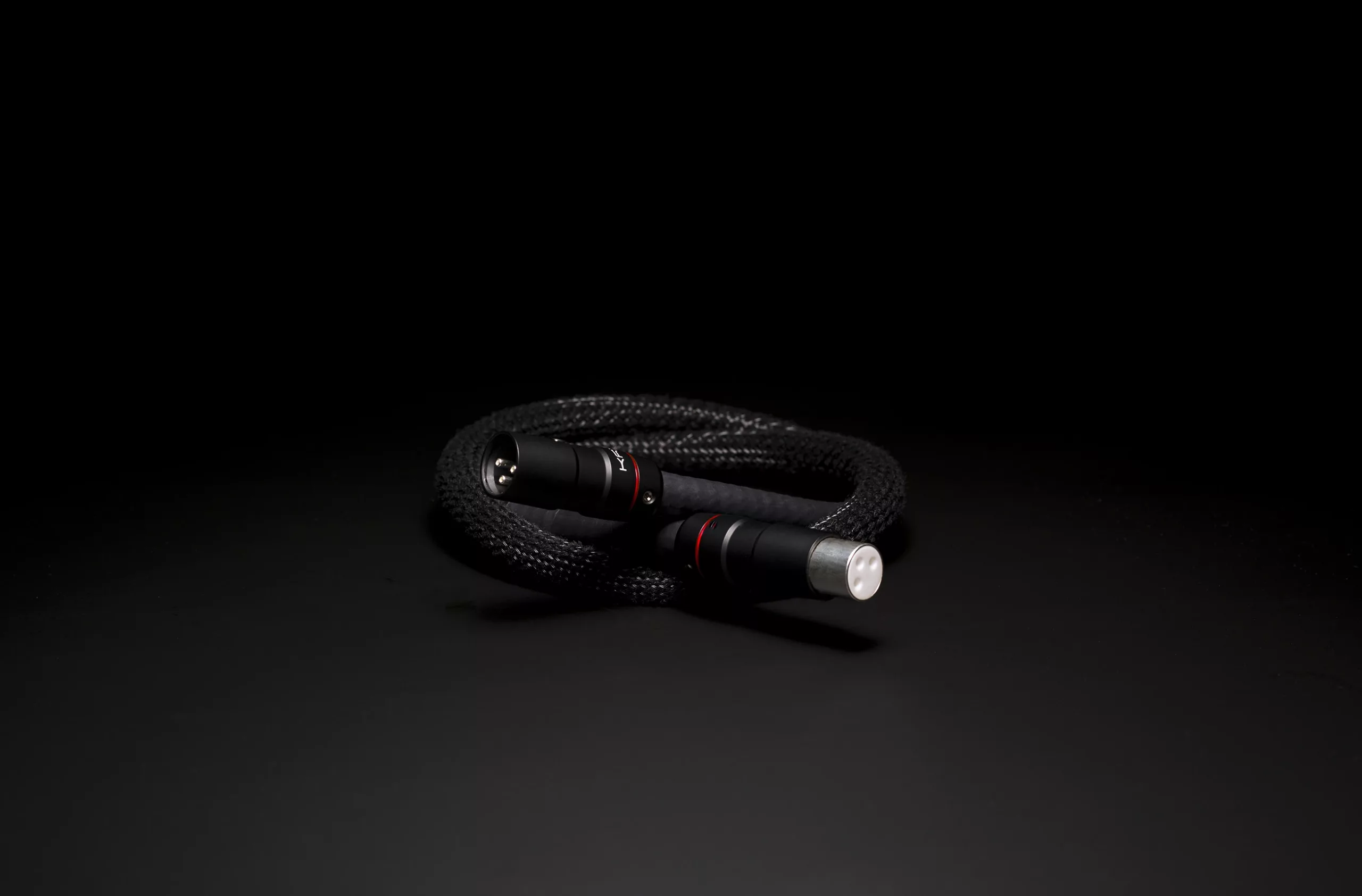
AES/EBU
ETI Kryo XLR
Impedance
Clock/SPDIF
75Ω
AES/EBU
110Ω
RFI/EMI Absorption
Multi-phase, ultra wideband filter and proprietary EMI absorbent tubing
Outer Covering
ABS acoustic dampening outer braiding
Length
0.75m, 1.0m and then 0.5m increments up to 4m