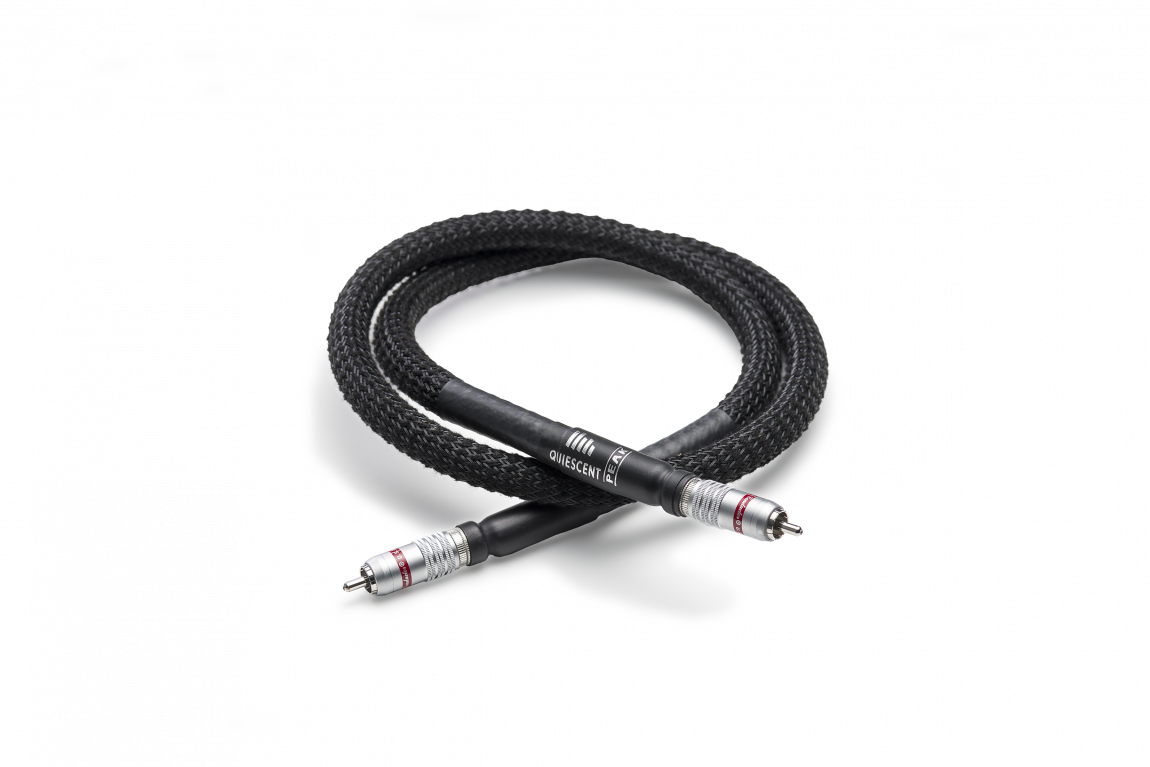
Peak Analogue Interconnects
Analogue signal cables engineered for quiet transfer.
Peak Analogue Interconnects are RCA and XLR signal cables for high-performance systems where every connection forms part of the musical environment.
They use solid-core silver-plated oxygen-free copper conductors, air dielectric insulation and Quiescent EMI/RFI absorption to preserve the analogue signal while reducing the high-frequency energy that can travel around it.
Previous
Next
Peak Analogue Interconnects for quieter signal transfer
An analogue interconnect carries a delicate voltage signal between components, but it can also become a path for high-frequency noise, mechanical vibration and field energy moving through the system. In a revealing audio system, that unwanted energy can sit around the signal and reduce timing, space and low-level clarity.
Peak Analogue Interconnects are designed to preserve the musical signal while lowering the noise field around the connection. The result is not added warmth, brightness or emphasis, but a calmer relationship between components: cleaner edges, steadier images and a more continuous sense of musical flow.
The Hi-Fi Critic review noted a lower perceived noise floor even when vinyl was playing through the system. That observation is consistent with the Quiescent view that a cable can influence more than the selected source; it can affect the wider electrical environment shared by connected components.
Reviewed by Hi-Fi Critic, Jul/Aug/Sep 2018.
Transmission-line thinking, applied quietly
At audio frequencies, an interconnect can appear simple. At RF and millimetre-wave frequencies, the same cable becomes a more complex transmission path, where conductor geometry, dielectric behaviour, shielding and termination affect how unwanted energy is reflected, absorbed or carried onward.
Peak Analogue Interconnects use solid-core silver-plated conductors, low-capacitance air dielectric insulation and Quiescent EMI/RFI absorption tubing to give high-frequency standing waves a controlled path away from the musical signal.
This is a more accessible expression of the thinking used in Apex Analogue Interconnects, with the same emphasis on quiet transfer rather than tonal shaping.
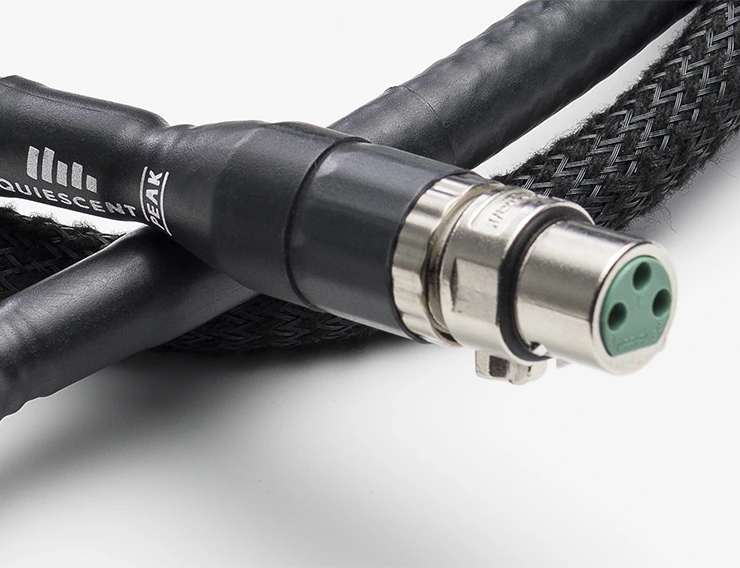
Solid-core conductors, air dielectric, absorbed RF
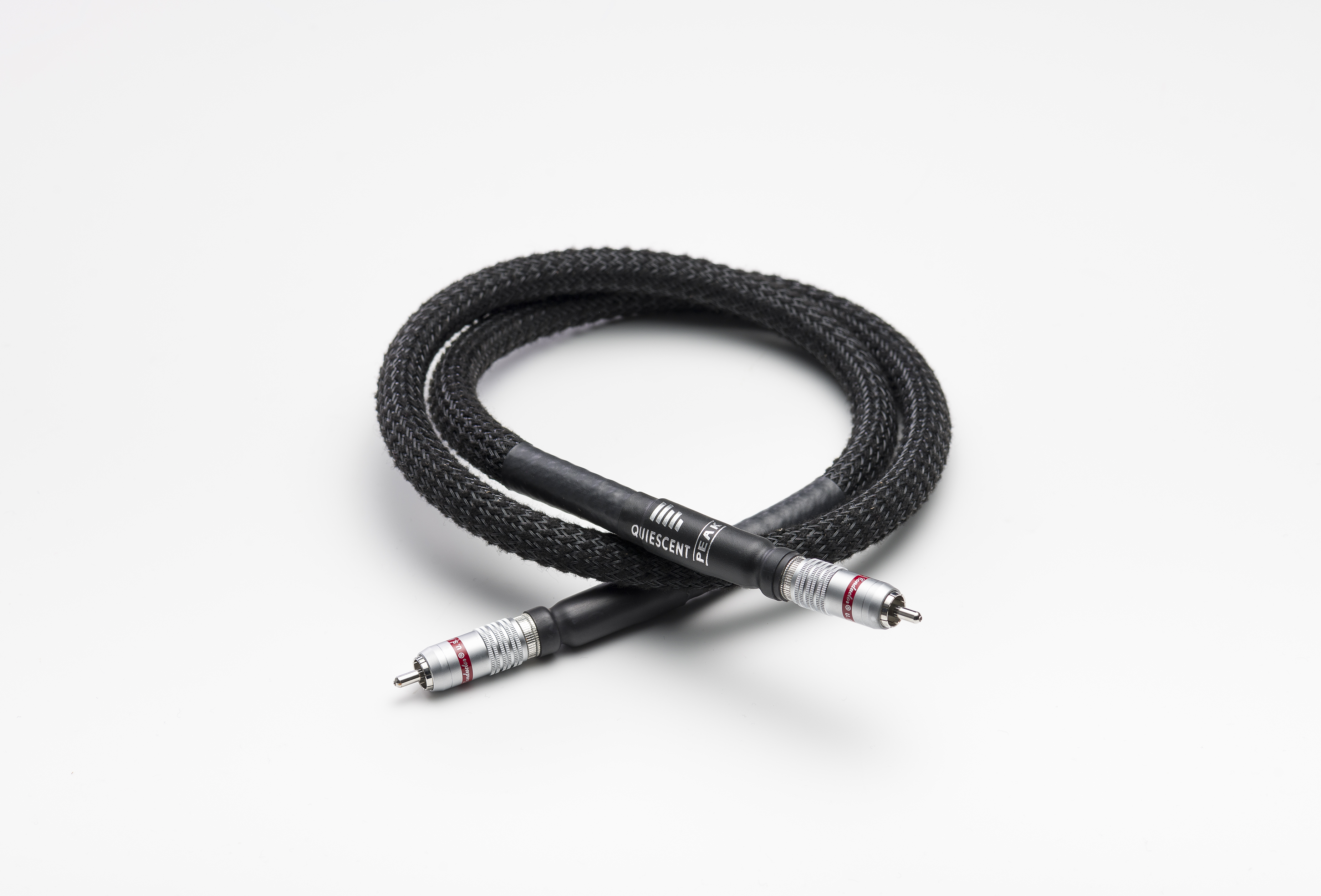
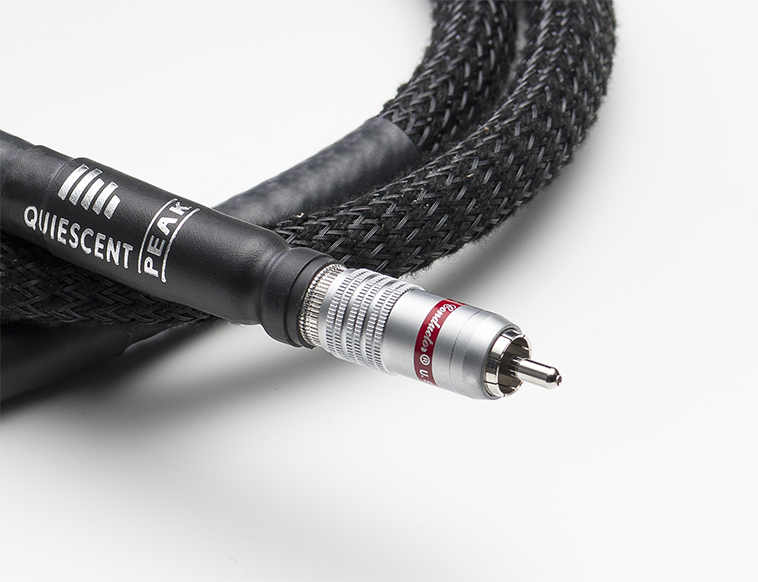
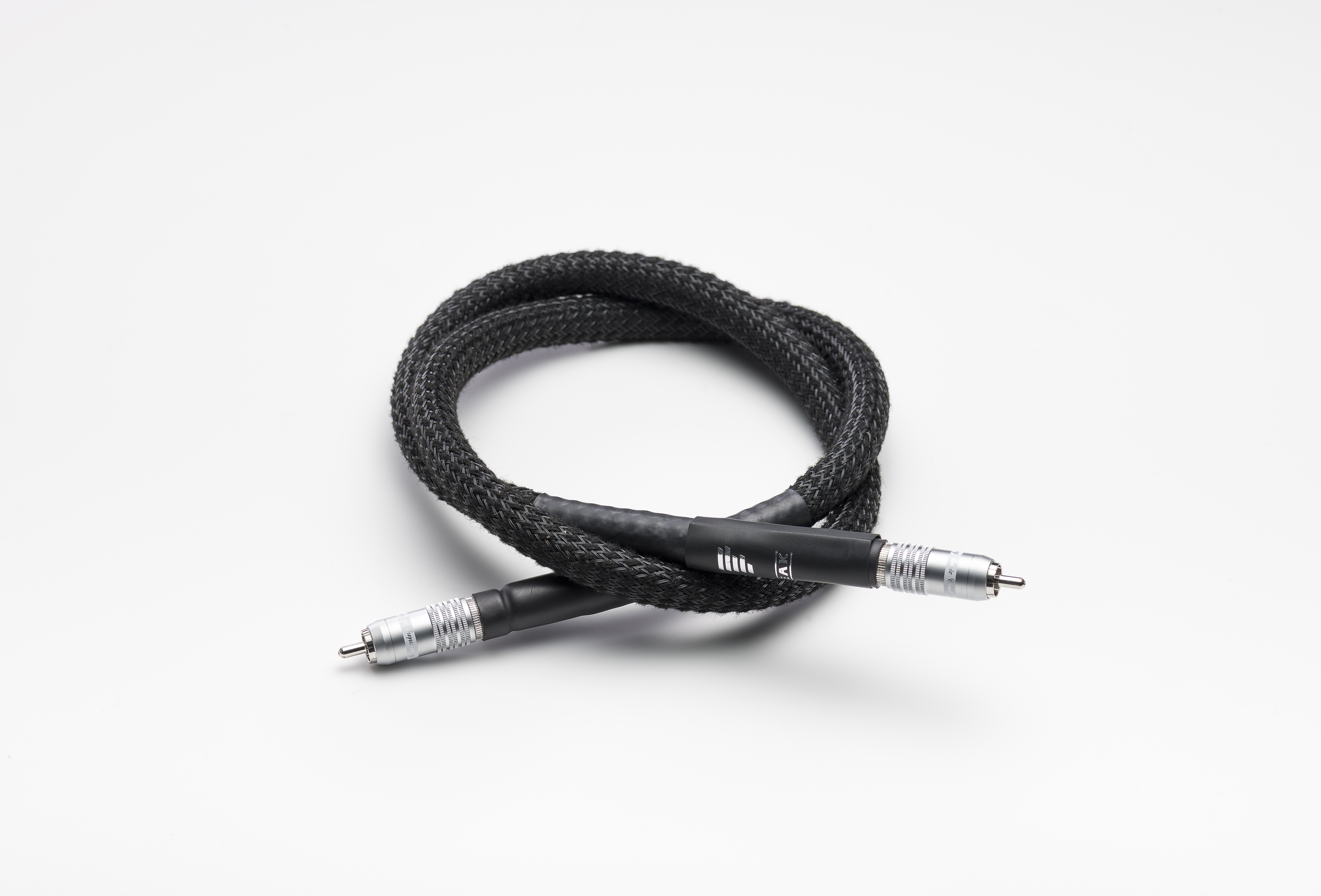
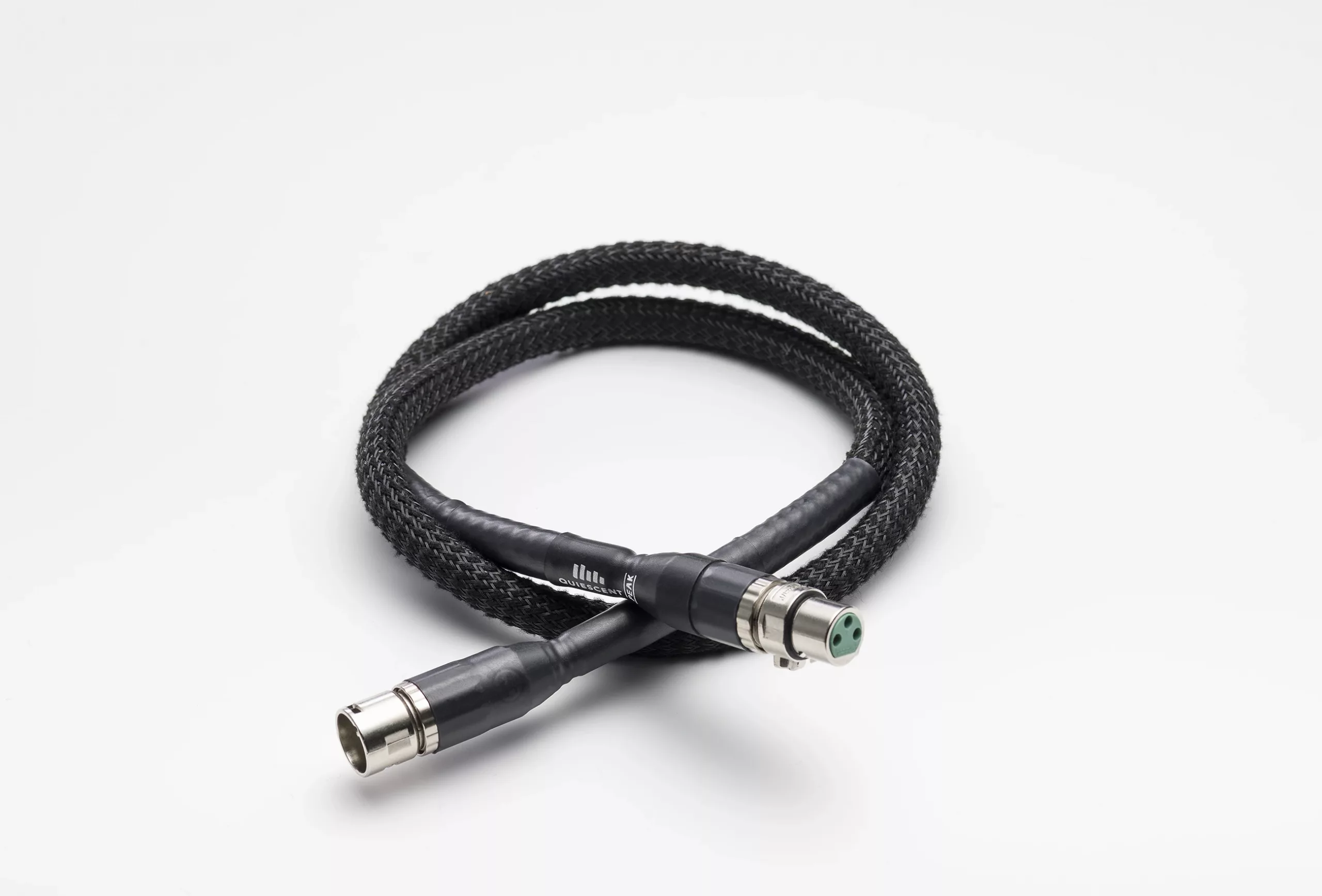
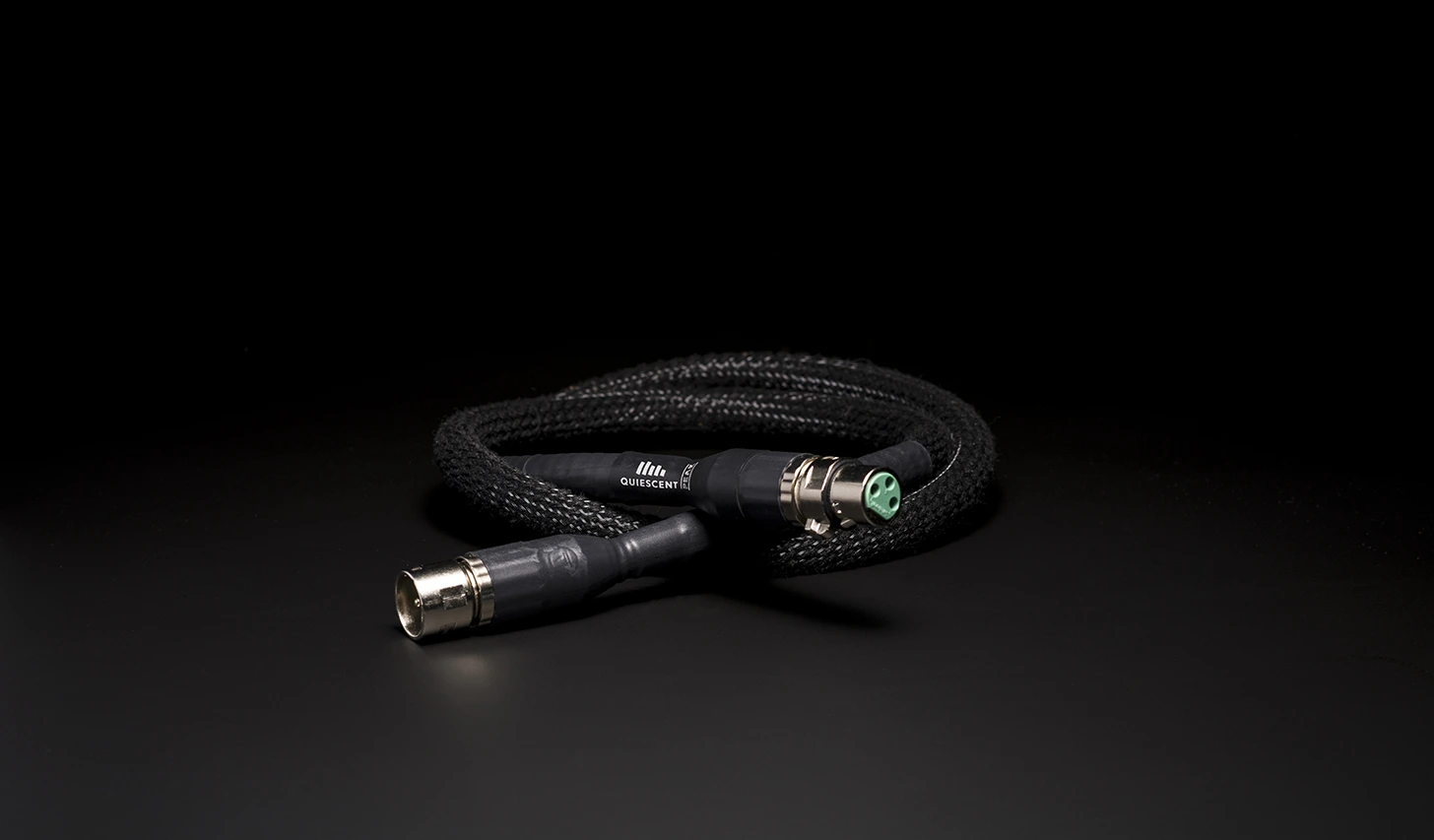
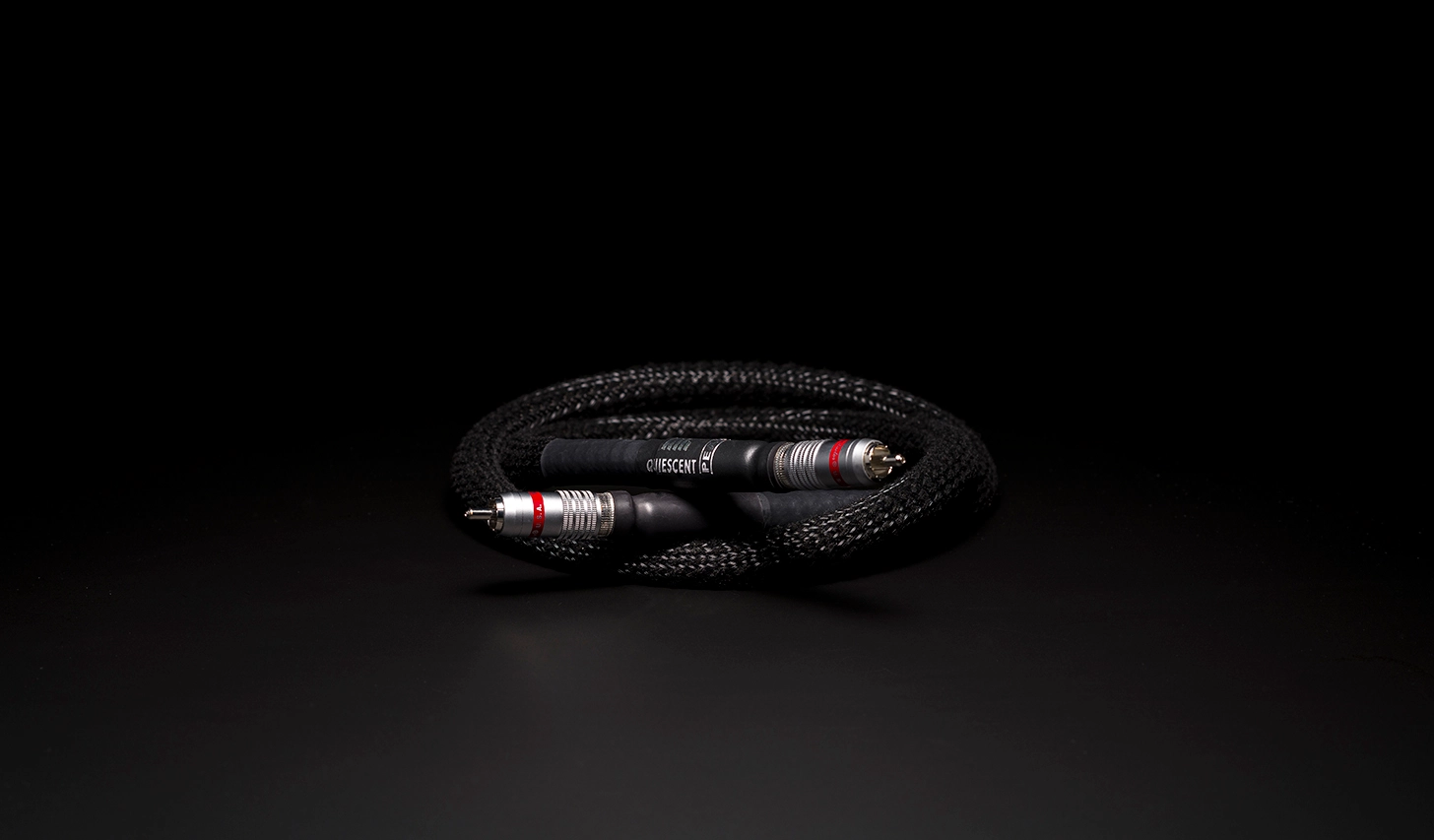
Peak Analogue Interconnects use 10% silver-plated oxygen-free copper solid-core conductors. RCA versions use two conductors for signal and ground. XLR versions use three conductors for balanced connection.
Each conductor runs through Teflon air-tube insulation to keep capacitance low, before the assembly is enclosed in proprietary EMI/RFI absorption tubing and acoustically damped ABS braid.
RCA cables are fitted with rhodium-plated connectors. XLR cables are fitted with silver-plated Switchcraft connectors.
Analogue interconnects as part of the system environment
Why the connection matters
Peak Analogue Interconnects are built around the idea that an audio cable is not simply a length of wire between two components. It is a conductor, a dielectric, a mechanical path and an electrical interface between two chassis.
The wanted signal remains in the audio band, but the surrounding environment does not. Digital sources, DAC clocks, network devices, wireless fields and switch-mode power supplies can all introduce high-frequency energy into a system. Once present, that energy can travel along conductors, screens, grounds and cable structures, where it may modulate the conditions around the musical signal.
High-frequency behaviour
At very high frequencies, the wavelength of unwanted energy can become short enough that cable geometry, dielectric behaviour, and termination can matter. Energy may travel along the surface of conductors, reflect from impedance changes or form standing waves between connected components.
Peak Analogue Interconnects are designed to reduce this behaviour without placing a filter in the audio signal path. The aim is to preserve low-frequency musical current while giving unwanted high-frequency energy a more lossy, less reflective route.
Solid-core conductors and air dielectric
The use of solid-core, silver-plated, oxygen-free copper provides the signal path with a stable conductor geometry. The Teflon air-tube dielectric keeps most of the insulating material away from the conductor, reducing capacitance and lowering unwanted energy storage around the signal.
This matters because an interconnect is asked to carry small signal voltages while preserving timing, phase, and low-level information intact. A quieter physical environment helps the connected components maintain those relationships with less disturbance.
Absorption rather than tonal shaping
Many cables alter system balance by changing capacitance, resistance, shielding or dielectric behaviour in ways that become part of the sound. Quiescent takes a different approach.
Peak Analogue Interconnects use proprietary EMI/RFI absorption tubing around the cable assembly to reduce high-frequency standing waves and field energy. The intention is not to voice the cable, but to lower unwanted influence around the signal path so the components can sound more like themselves.
RCA and XLR versions
The RCA version uses two solid-core silver-plated conductors for signal and ground. The XLR version uses three conductors for balanced connection. Both versions apply the same Quiescent approach to conductor stability, low capacitance, RF absorption and mechanical damping.
Peak sits below Apex within the Quiescent analogue cable range, offering a more accessible route into the same design philosophy. Apex extends the approach with a higher-capacity architecture for systems where every interface is being taken further.
The listening result
The result should be heard as composure rather than character. Harshness and glare are reduced because the musical signal is less affected by high-frequency energy moving around it. Timing becomes easier to follow, spatial information is less masked, and the system can present tonal colour and dynamic contrast more easily.
The wider behaviour of high-frequency energy in connected audio systems is explored in The Physics of Quiet.
Specifications
Conductors
RCA
2 x 1.25mm solid core 10% silver plated oxygen free copper
XLR
3 x 1.00mm solid core 10% silver plated oxygen free copper
Shielding
Quiescent proprietary EMI absorption
Dielectric
Air dieletric in Teflon ™
Connectors
CMC-8236-CUR-RH Rhodium plated RCA
RCA
CMC-8236-CUR-RH Rhodium plated RCA
XLR
Switchcraft silver plated XLR
Braiding
Acoustically dampened ABS