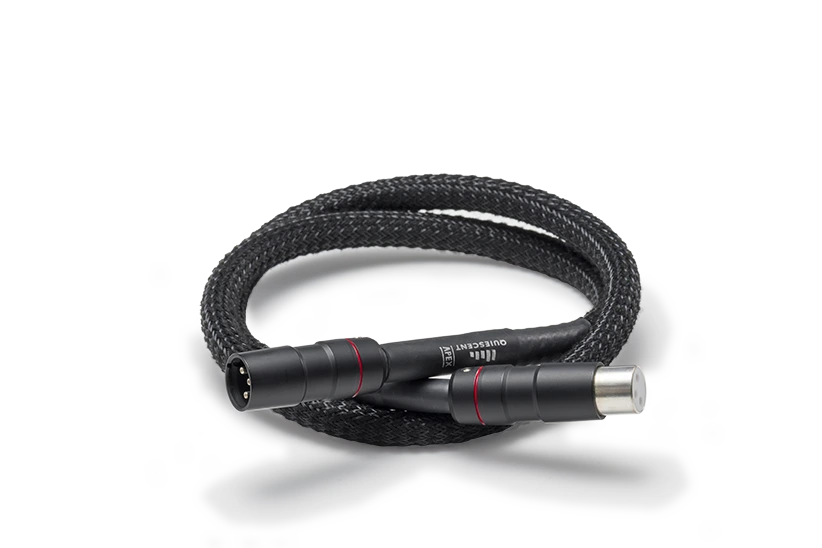
Apex Analogue Interconnects
Solid silver RCA and XLR interconnects for quieter low-level signal transfer.
Apex Analogue Interconnects are designed for the delicate signal path between source, control and amplification stages. These low-level analogue connections carry musical information at small voltages, while sharing the same environment as digital clocks, power supplies, RF fields and ground-plane noise.
Quiescent applies the Apex cable architecture to this signal path: solid silver conductors, Teflon air-tube dielectric, proprietary EMI/RFI absorption and acoustically damped outer construction. The purpose is quiet transfer, allowing connected components to preserve timing, phase and spatial information with less unwanted influence.
Previous
Next
Apex Analogue Interconnects for quieter signal transfer
An analogue interconnect carries a low-level voltage signal between components. It is a quieter duty than a speaker cable or mains cable in one sense, but it is also more delicate: small changes in capacitance, dielectric behaviour, ground reference, vibration and high-frequency energy can sit close to the music.
Apex Analogue Interconnects are designed to reduce those unwanted influences. Their solid silver conductors provide a stable, low-resistance signal path, while the air dielectric and Quiescent absorption materials help control the high-frequency field around the connection.
The result should not be heard as a cable imposing its own balance. It should be heard as less strain between components: cleaner timing, more stable images, quieter backgrounds and a more natural sense of flow.
Apex cable thinking, applied to analogue signal
Apex Analogue Interconnects use the same Quiescent principles found in Apex mains and speaker cables, but adapted for low-level analogue signal transfer. The cable is treated as a transmission structure, a mechanical path and an electrical interface between components.
Each conductor is threaded through Teflon air-tube insulation to keep dielectric contact and capacitance low. Around that signal path, Quiescent proprietary EMI/RFI absorption tubing and acoustically damped braid are used to reduce high-frequency energy and vibration without placing a conventional filter in the audio signal path.
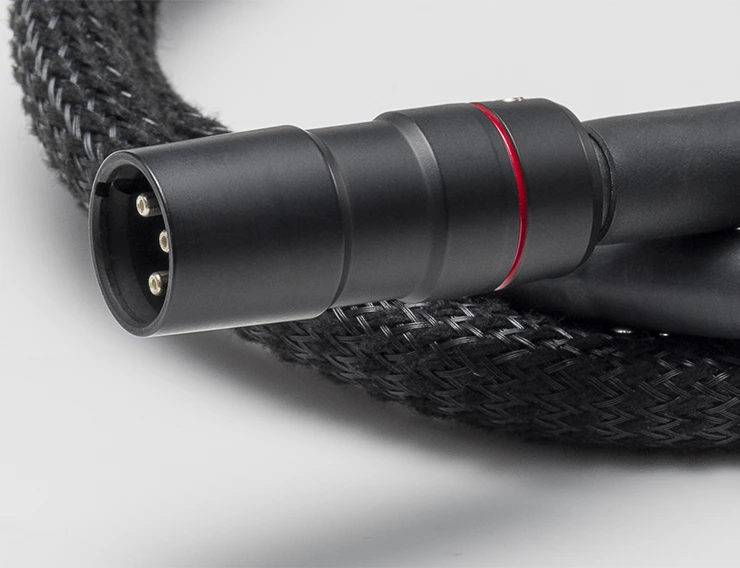
Solid silver, air dielectric, absorbed RF
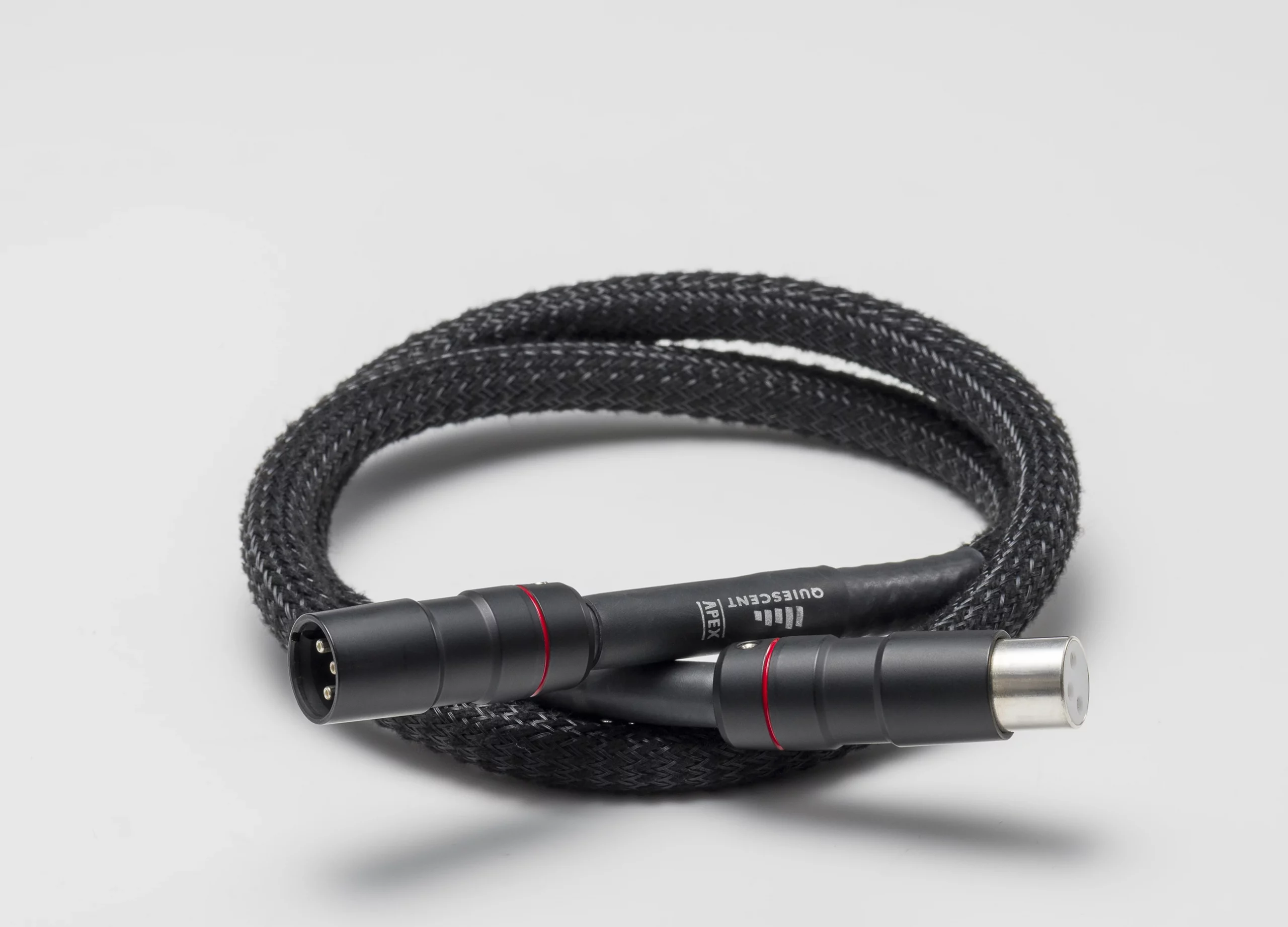
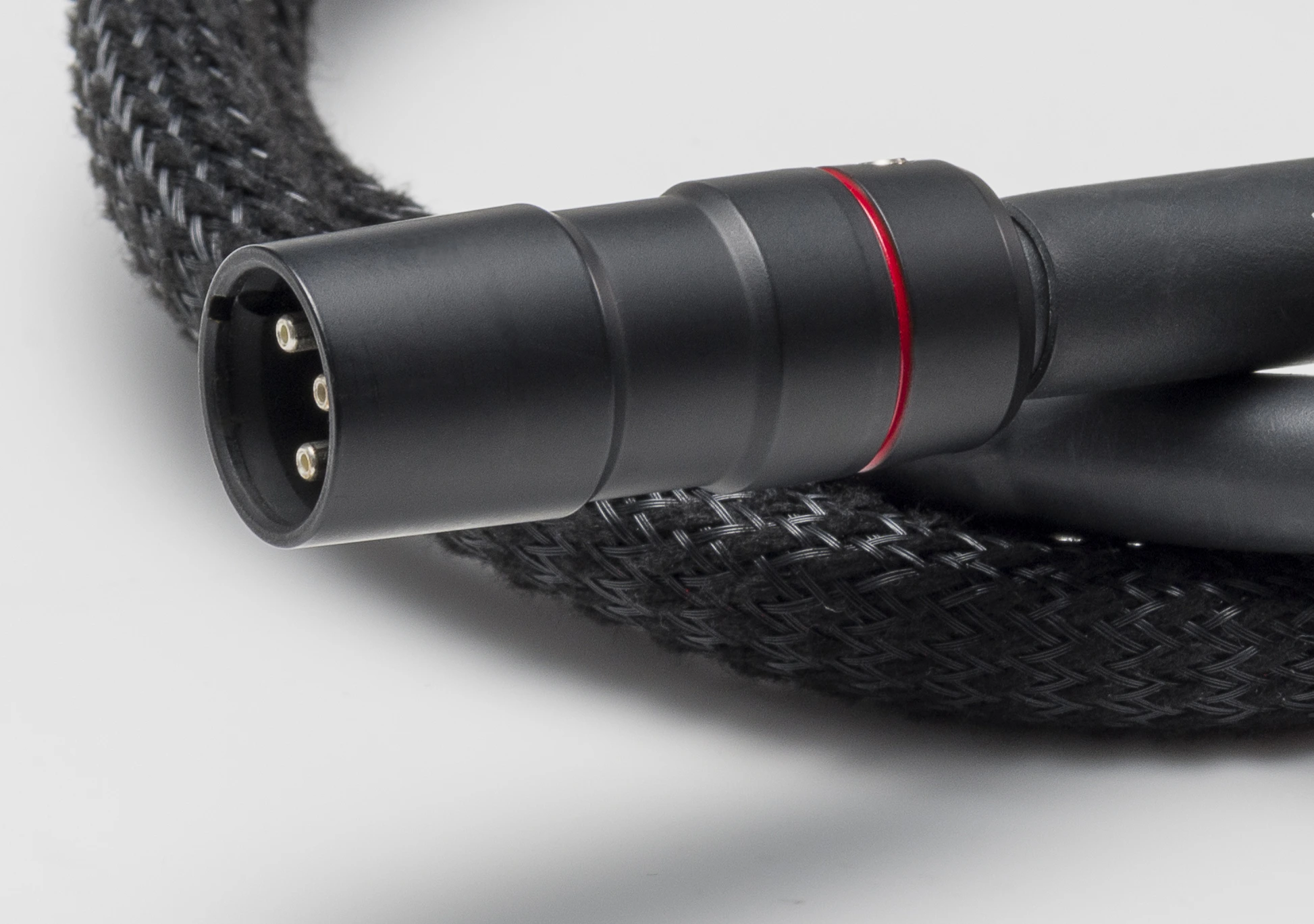
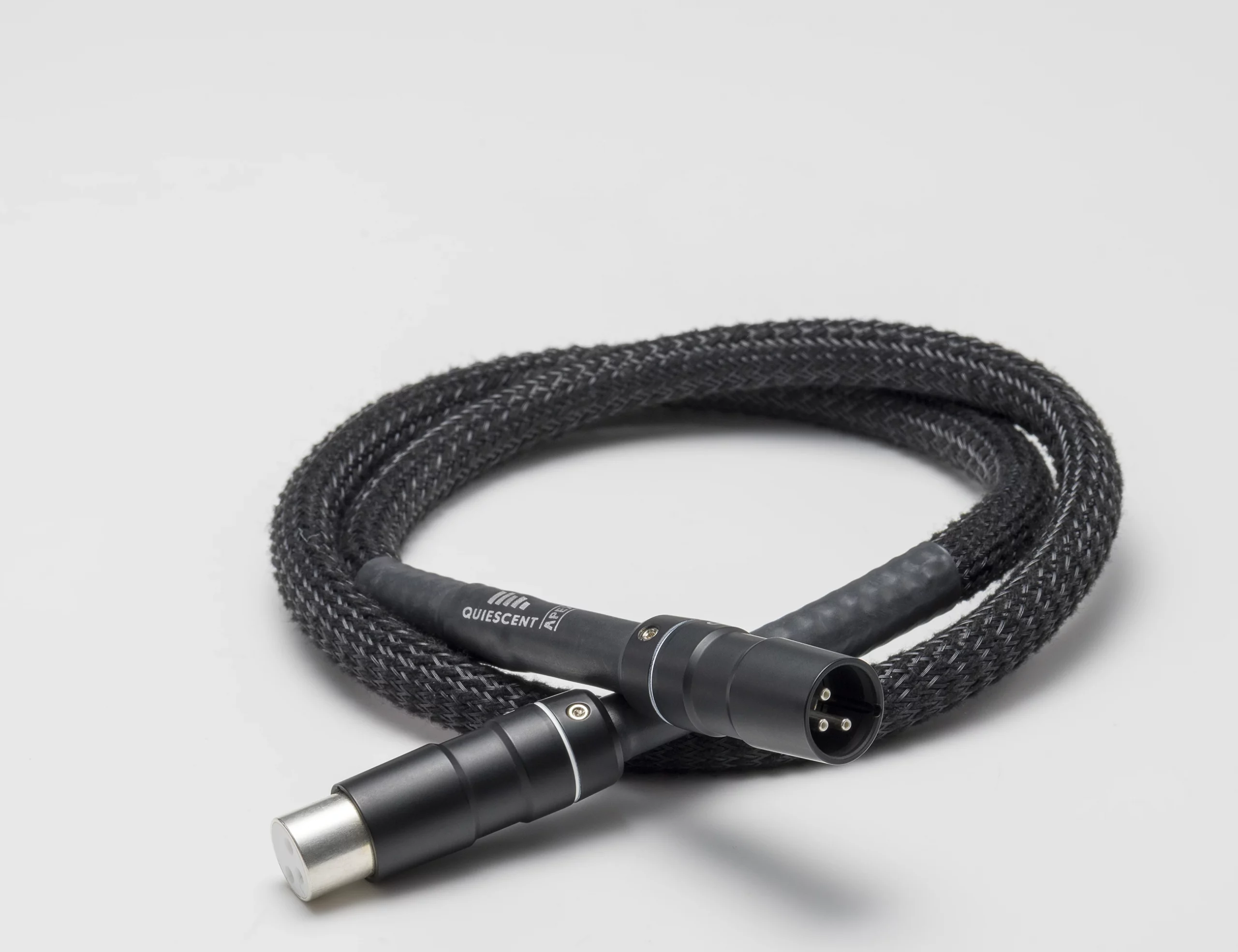
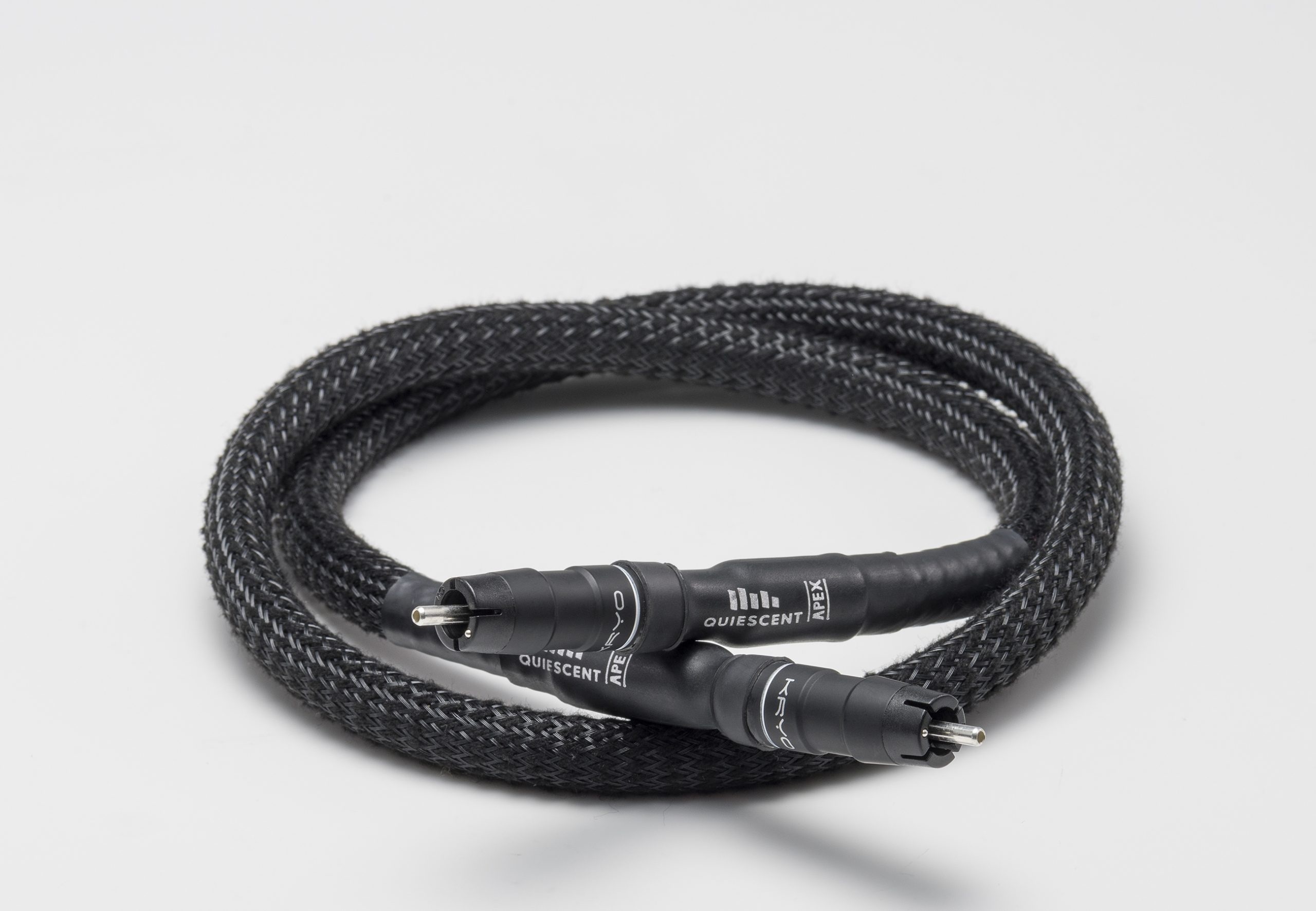
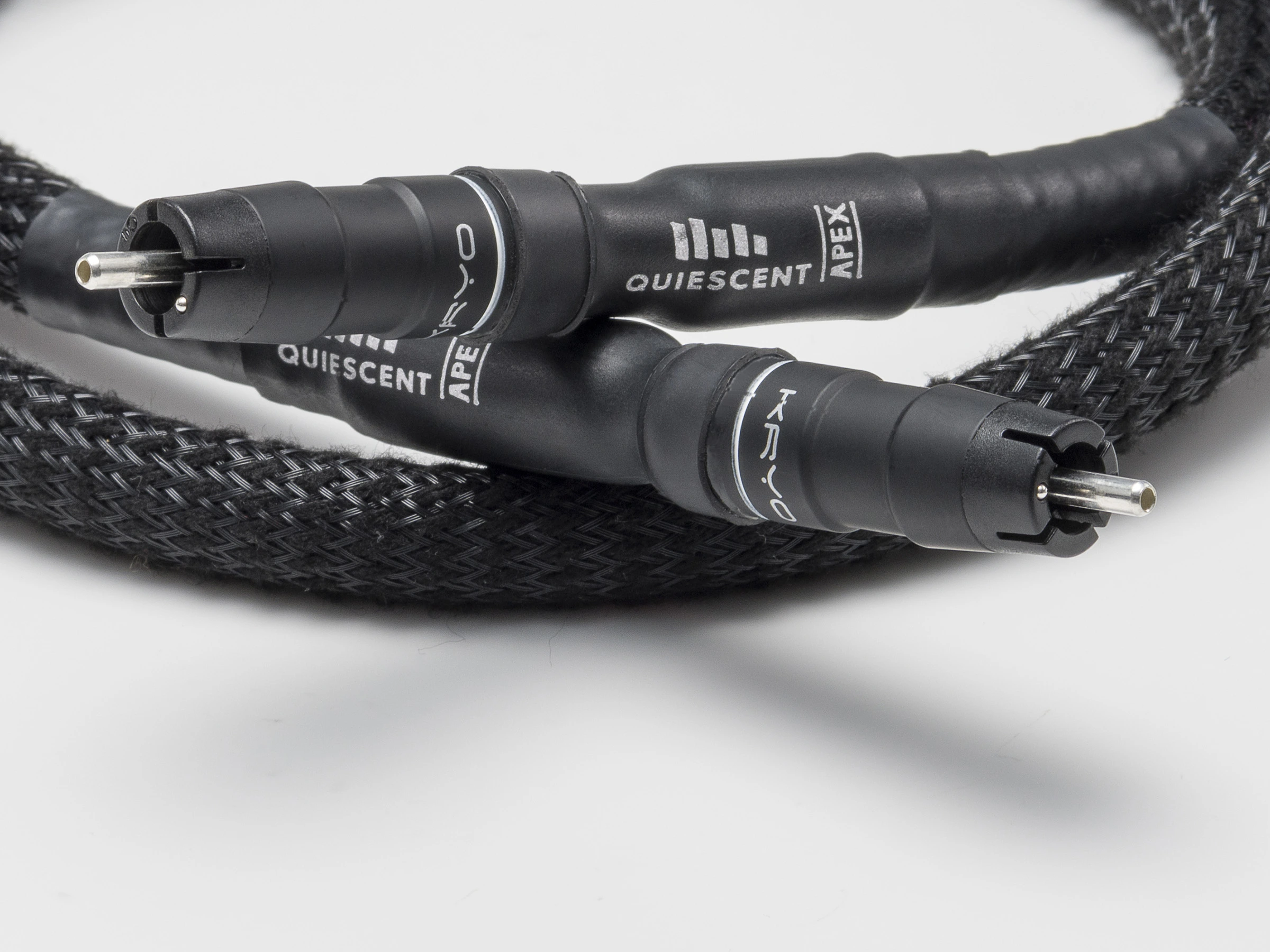
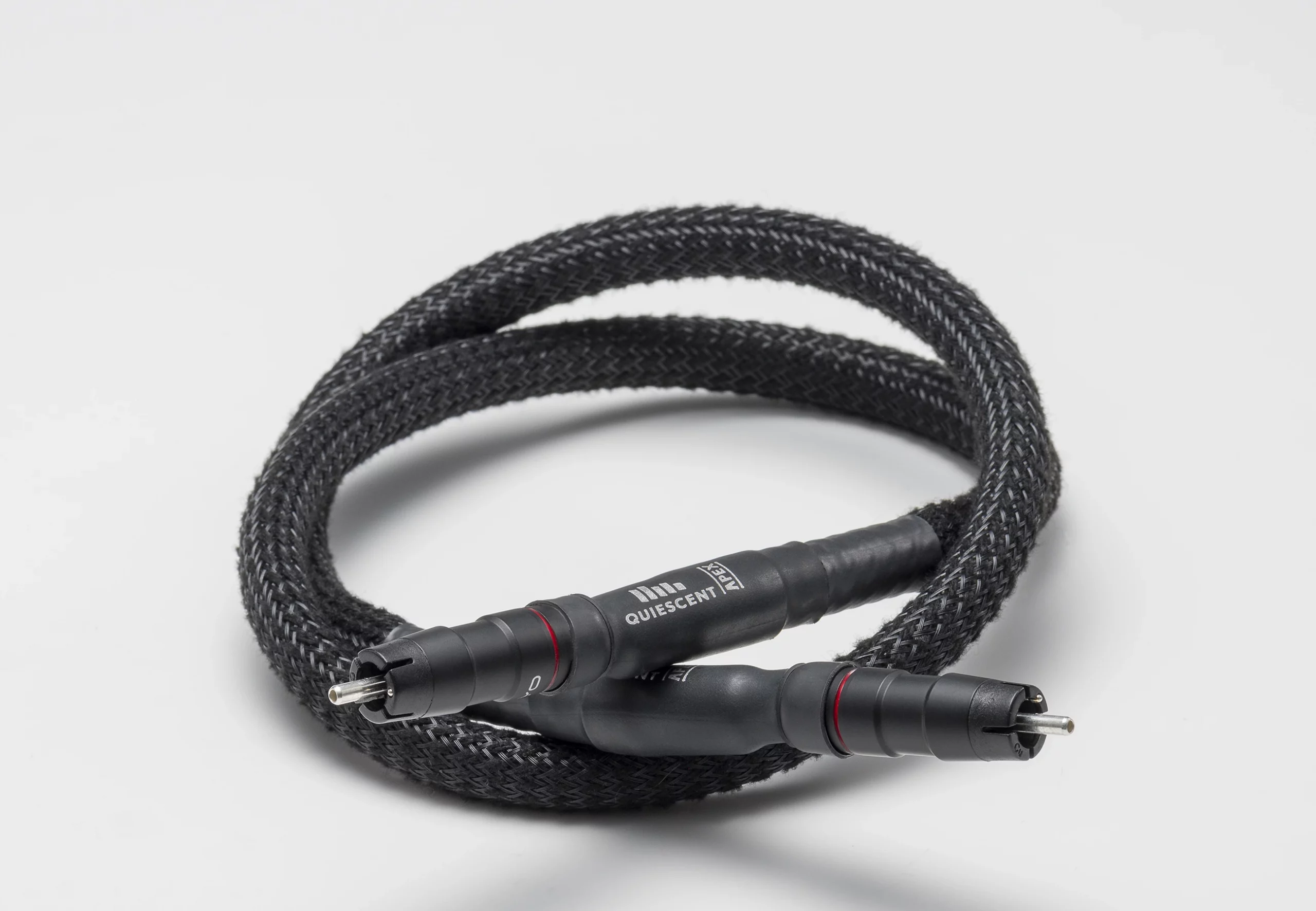
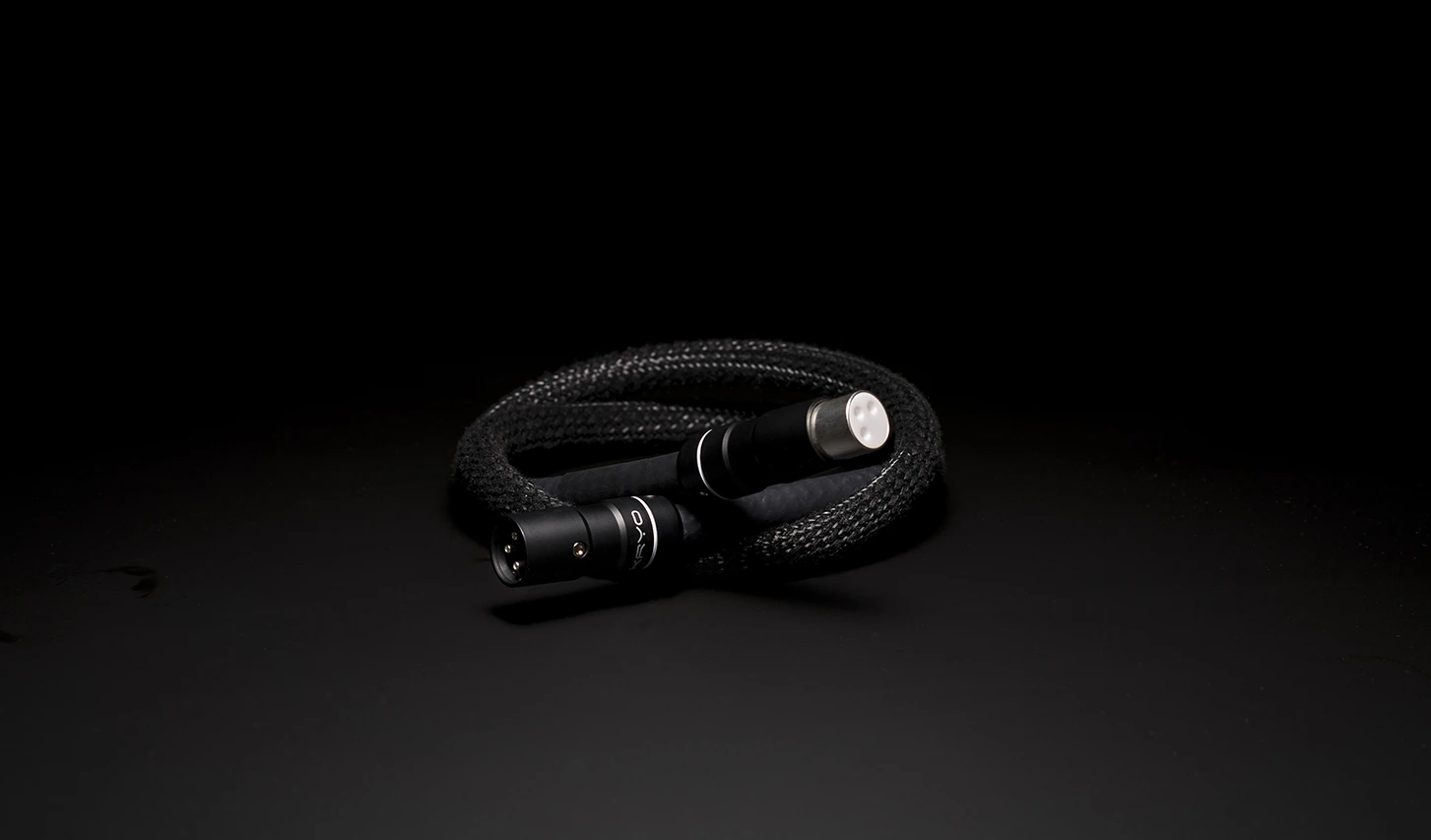
RCA versions use two 1.25mm 99.9% solid silver conductors. XLR versions use three 1.0mm, 99.9% solid-silver conductors. Both formats use air dielectric in Teflon tubing, proprietary EMI/RFI absorption and acoustically damped ABS braid.
The cables are terminated with ETI Kryo solid-silver connectors using a cold-solder technique, preserving the integrity of the conductor path and the quietness of the finished assembly.
Why Apex analogue interconnects matter
Low-level signal, shared environment
Analogue interconnects carry small signal voltages between components. The wanted signal remains in the audio band, but the cable sits inside a much wider electrical environment. Digital clocks, network devices, switch-mode power supplies, RF fields and ground-plane activity can all introduce high-frequency energy around the connection.
At this scale, the cable is not only a conductor. It is also a dielectric system, a mechanical path and a reference between two chassis. The quieter that interface becomes, the easier it is for the connected components to preserve low-level musical information.
The step up from Peak
Peak Analogue Interconnects introduce the Quiescent approach to quiet analogue transfer: controlled conductor geometry, air-dielectric insulation and proprietary EMI/RFI absorption.
Apex takes that same design philosophy further. The conductors are 99.9% solid silver rather than silver-injected copper, and the construction is specified for systems in which the analogue interface is treated as part of the wider noise-control architecture.
Transmission-line behaviour
At audio frequencies, an analogue interconnect may appear electrically simple. At much higher frequencies, the same cable can behave as a transmission path. Energy can travel along conductor surfaces, reflect from impedance changes and form standing-wave behaviour between connected components.
Quiescent designs for this wider behaviour. Apex Analogue Interconnects are intended to preserve the desired low-frequency signal while providing unwanted high-frequency energy with a more lossy, less reflective environment.
Solid silver and air-dielectric
Solid silver conductors provide a stable conductor geometry and a highly conductive path for the signal. Each conductor is carried through a Teflon air tube so most of the dielectric surrounding the conductor is air rather than a heavier insulating material.
This helps keep capacitance low and reduces unwanted energy storage around the signal. In a low-level analogue connection, that stability supports timing, phase and fine spatial information.
Absorption around the signal path
Apex Analogue Interconnects do not use absorption as a tonal device. The proprietary EMI/RFI tubing and acoustically damped braid are there to reduce unwanted high-frequency electrical energy and mechanical vibration around the signal path.
The principle is the same as the wider Quiescent approach: unwanted energy should be given controlled routes for absorption and dissipation, rather than allowed to move freely between components.
RCA and XLR versions
The RCA version uses two solid silver conductors for signal and ground. The XLR version uses three solid silver conductors for balanced signal transfer. Both versions use the same Quiescent approach to conductor stability, low capacitance, RF absorption and mechanical damping.
The choice between RCA and XLR should follow the connected components and system architecture. The underlying design aim remains the same: quieter transfer of the analogue signal.
The system result
Apex Analogue Interconnects are designed to reduce disturbance rather than add emphasis. As high-frequency noise and mechanical energy are reduced around the connection, the system can sound more composed. Edges become cleaner, images settle more naturally, and complex passages are less likely to harden or lose shape.
The wider behaviour of high-frequency electrical and mechanical energy in connected audio systems is explored in The Physics of Quiet.
Specifications
Conductors
XLR
3 x 1.0mm 99.9% solid silver
RCA
2 x 1.25mm 99.9% solid silver
Shielding
Quiescent proprietary EMI absorption tubing
Dielectric
Air dieletric in Teflon tubing
Connectors
ETI Kryo solid silver
Braiding
Acoustically damp ABS braid