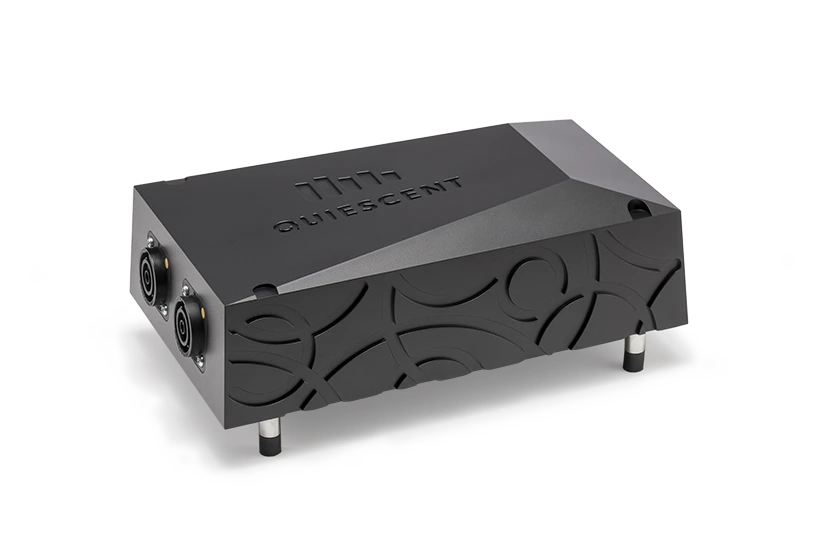
Peak Mains Module
Component-level mains control to reduce RF noise, vibration, and interaction across the audio mains loom.
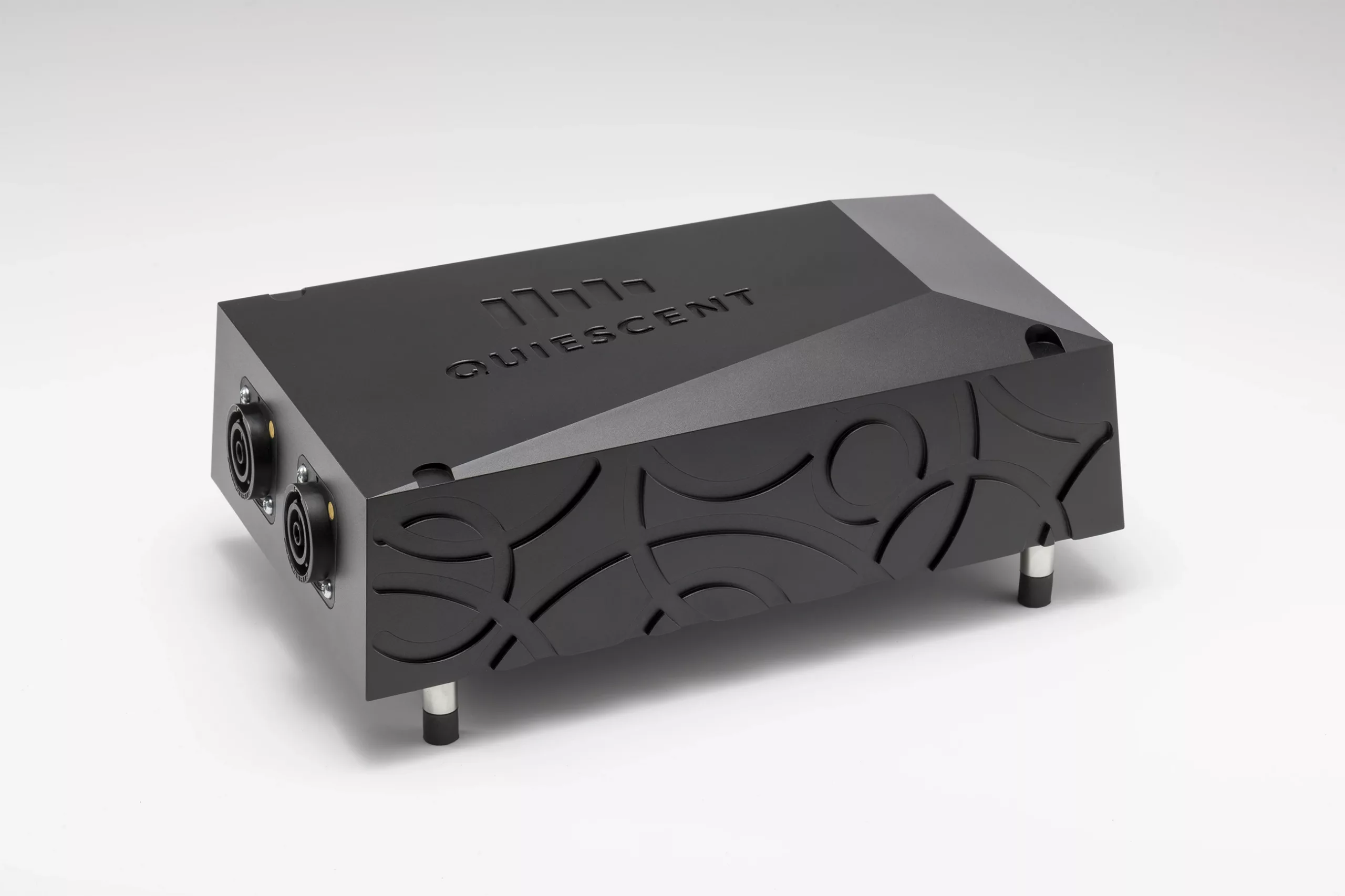
The Peak Mains Module sits in the mains loom between the supply and the audio component it serves, providing controlled paths for unwanted high-frequency electrical energy and mechanically coupled vibration into Quiescent absorption.
Each module treats the mains connection as part of the signal environment. Used individually, it supports a single component. Used across a system, it helps create a more stable mains reference for sources, preamplifiers, power amplifiers and other connected electronics.
The aim is not to add weight, brightness or warmth. It is to reduce the energy that does not belong to the music, allowing the system to perform with greater consistency, clarity and calm.
Previous
Next
A quieter mains reference
A listening system is never supplied by a perfectly still electrical environment. Switching supplies, routers, lighting, appliances and the audio components themselves can send RF noise and vibration into the mains network. As programme demand changes, these interactions can change with it.
The Peak Mains Module is placed close to the component it supplies, where it can reduce disturbance at the point of entry and limit what that component sends back into the mains loom.
The result should feel less like filtering and more like removal: quieter background conditions, stronger focus, steadier timing and a system that is less dependent on the changing state of the household supply.
Peak Mains Module Technology
High-performance audio electronics are shaped by more than the nominal 50 Hz mains supply. At high frequencies, the mains loom, component power supplies, ground references and chassis structures become part of a connected network.
The Peak Mains Module, at the heart of the Peak Mains Connection System, addresses this network locally. Its patented matrix technology is designed to provide high return loss across a wide bandwidth, reducing the tendency for unwanted energy to reflect between connected components.
Used as a system, Peak Mains Modules create a series of controlled absorption points throughout the mains loom, helping each component work from a quieter and more stable electrical and mechanical environment.
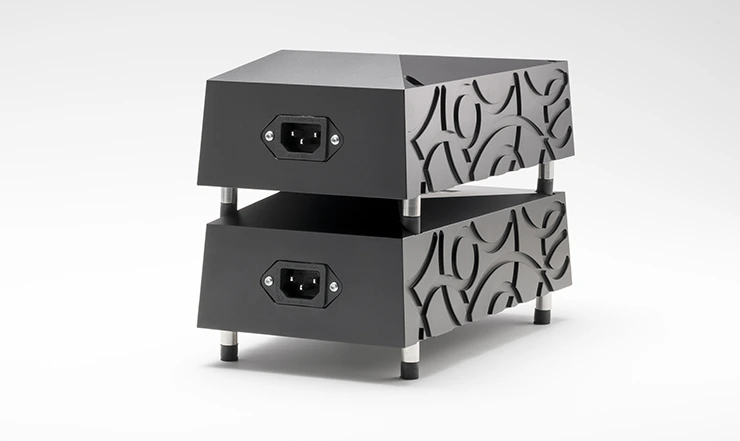
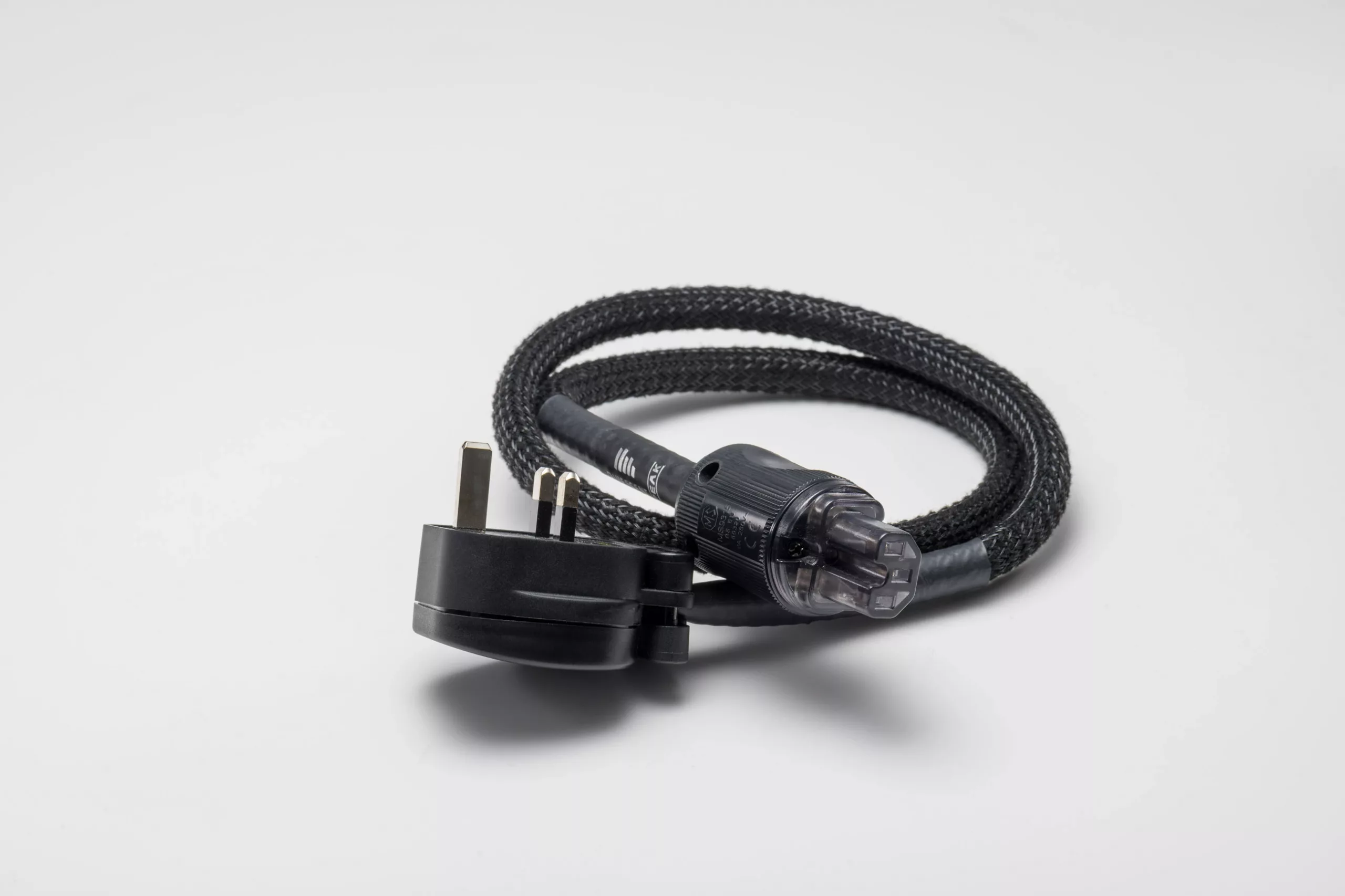
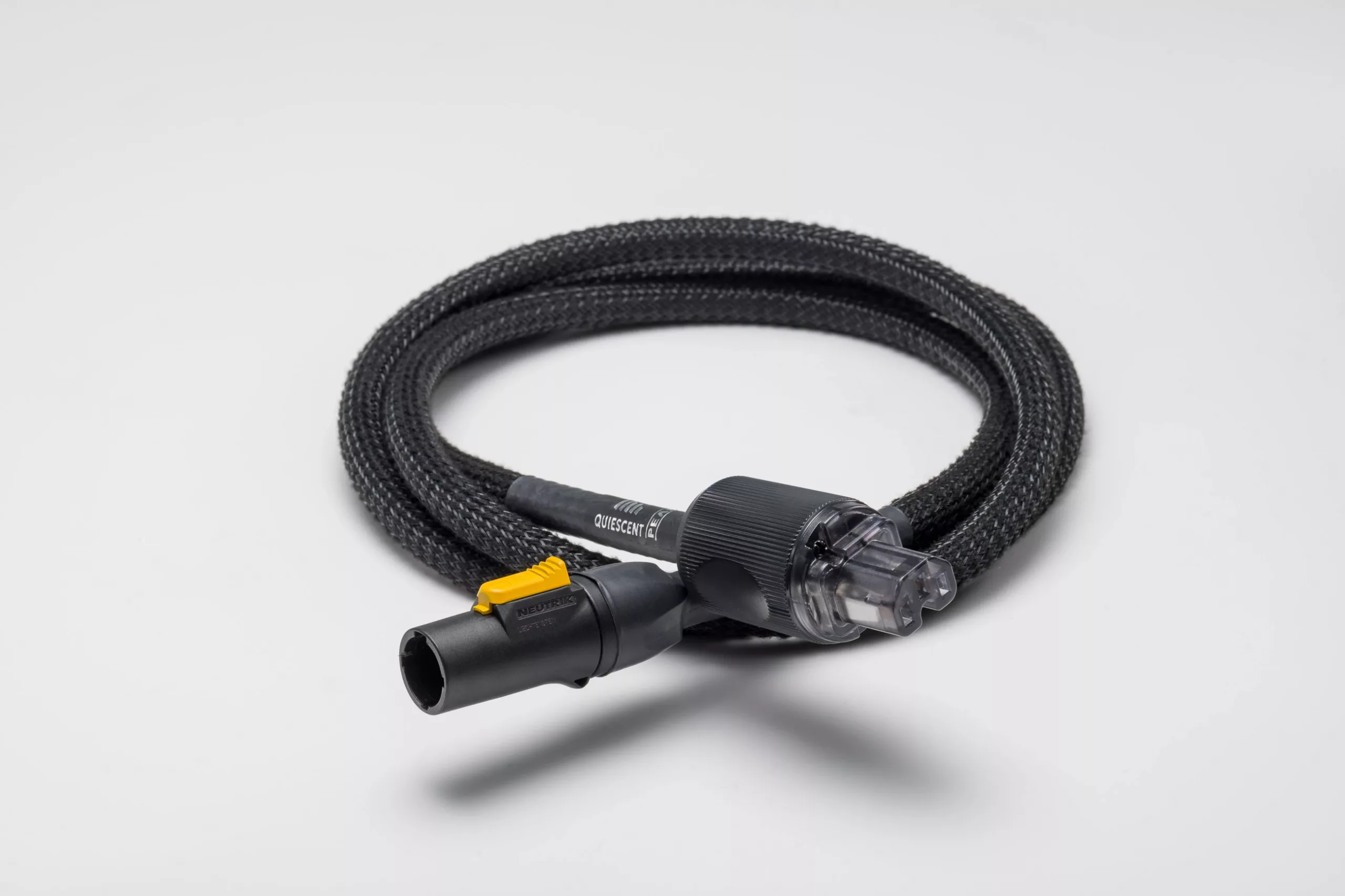
Module and cable options
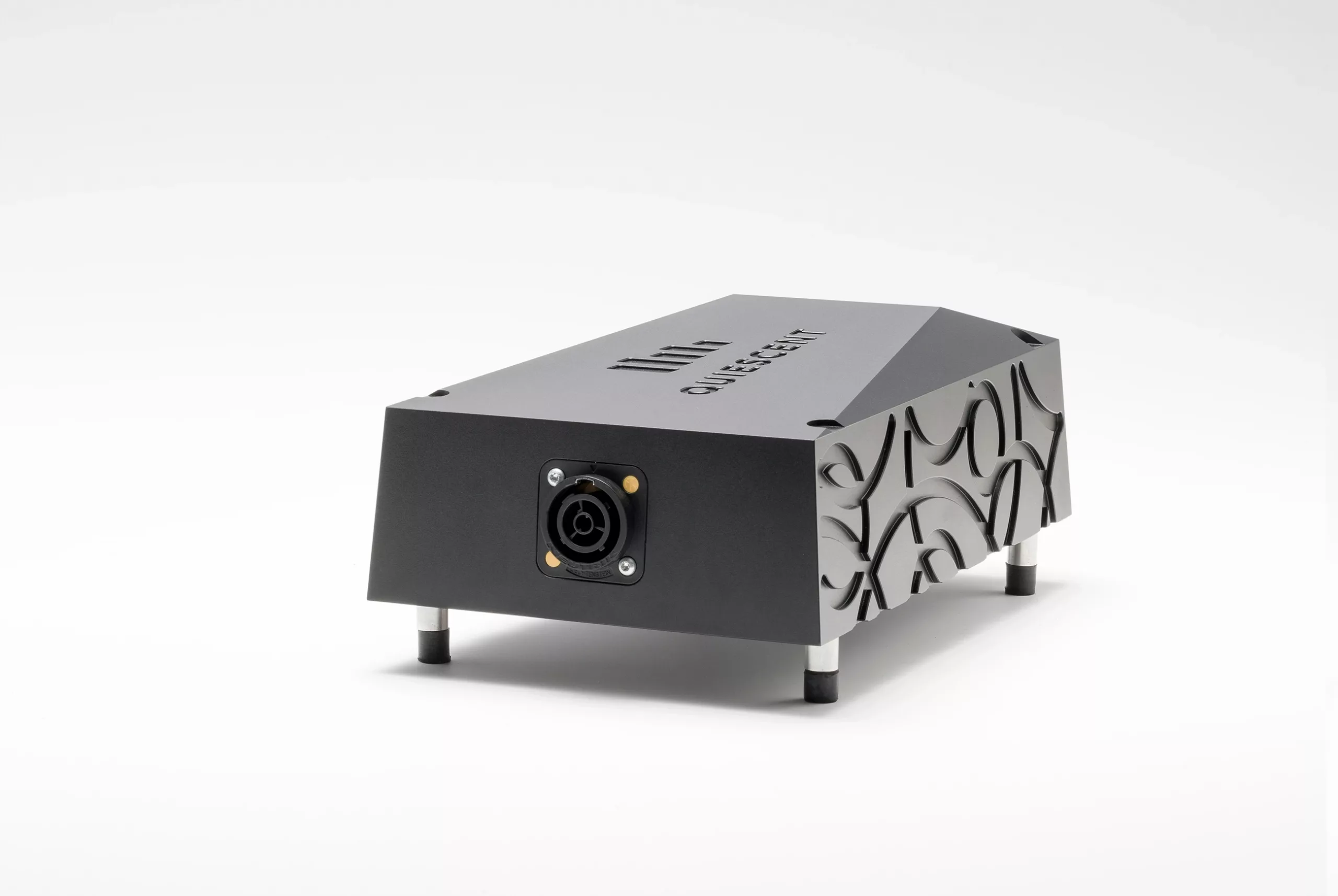
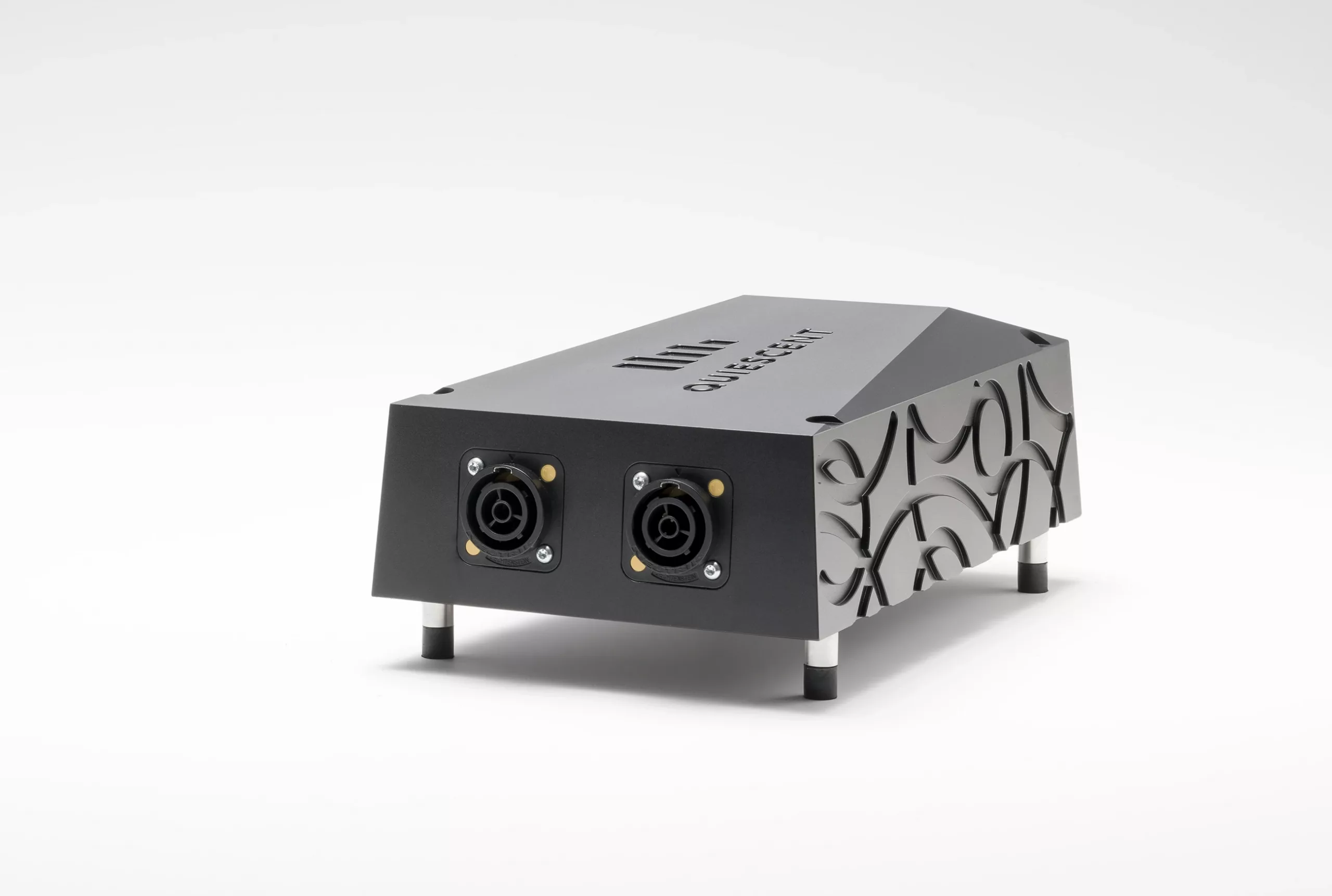
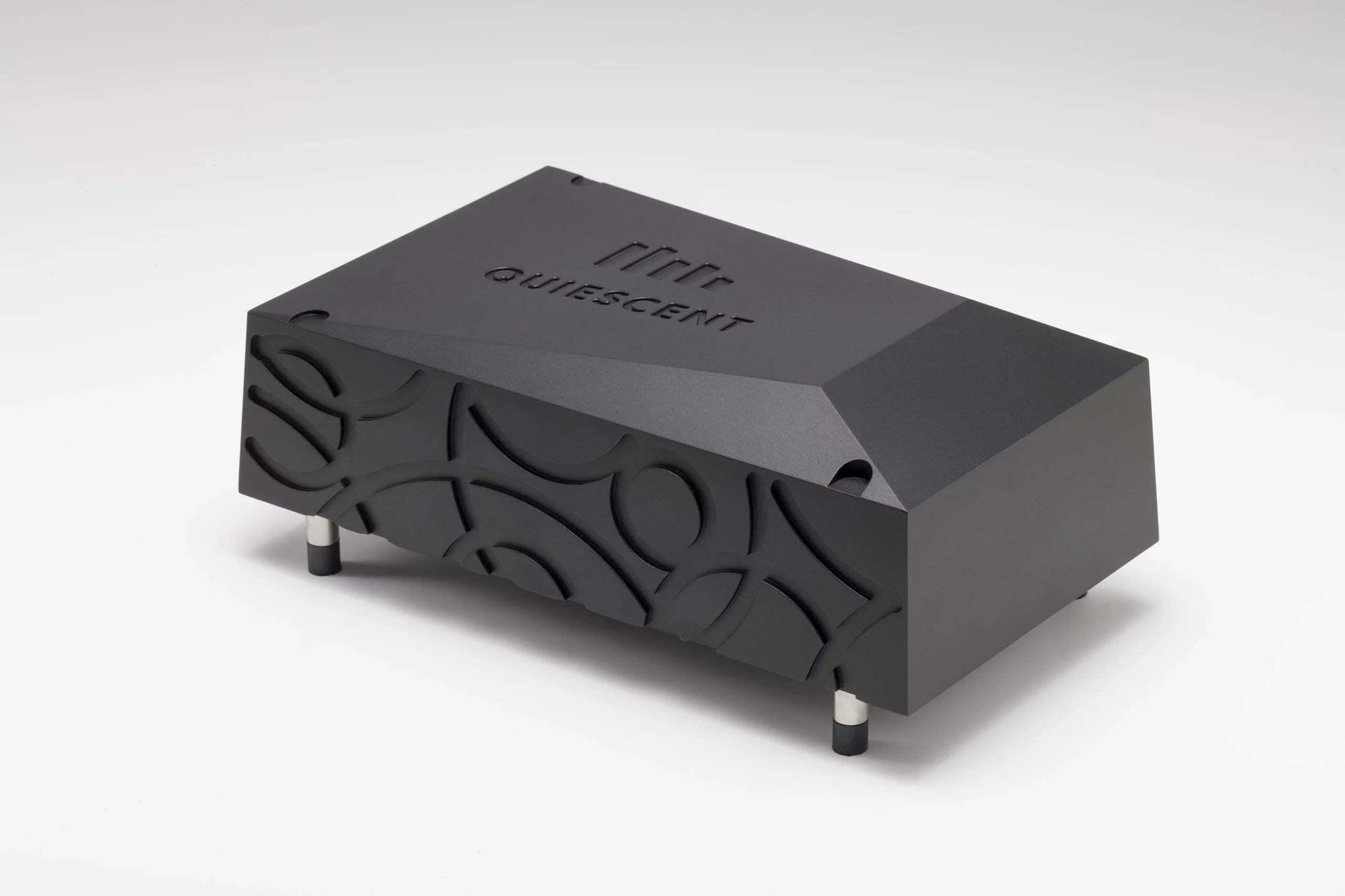
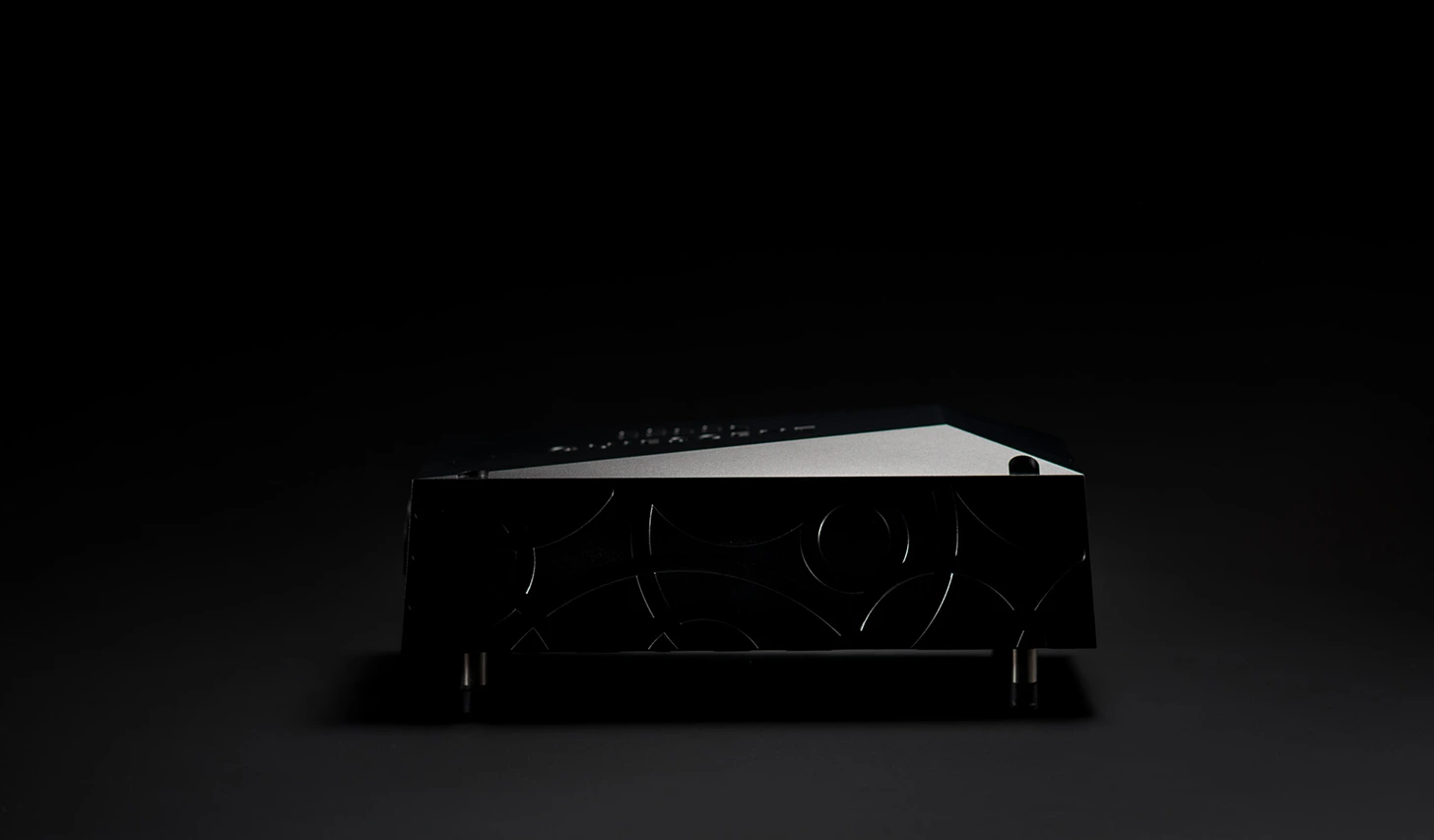
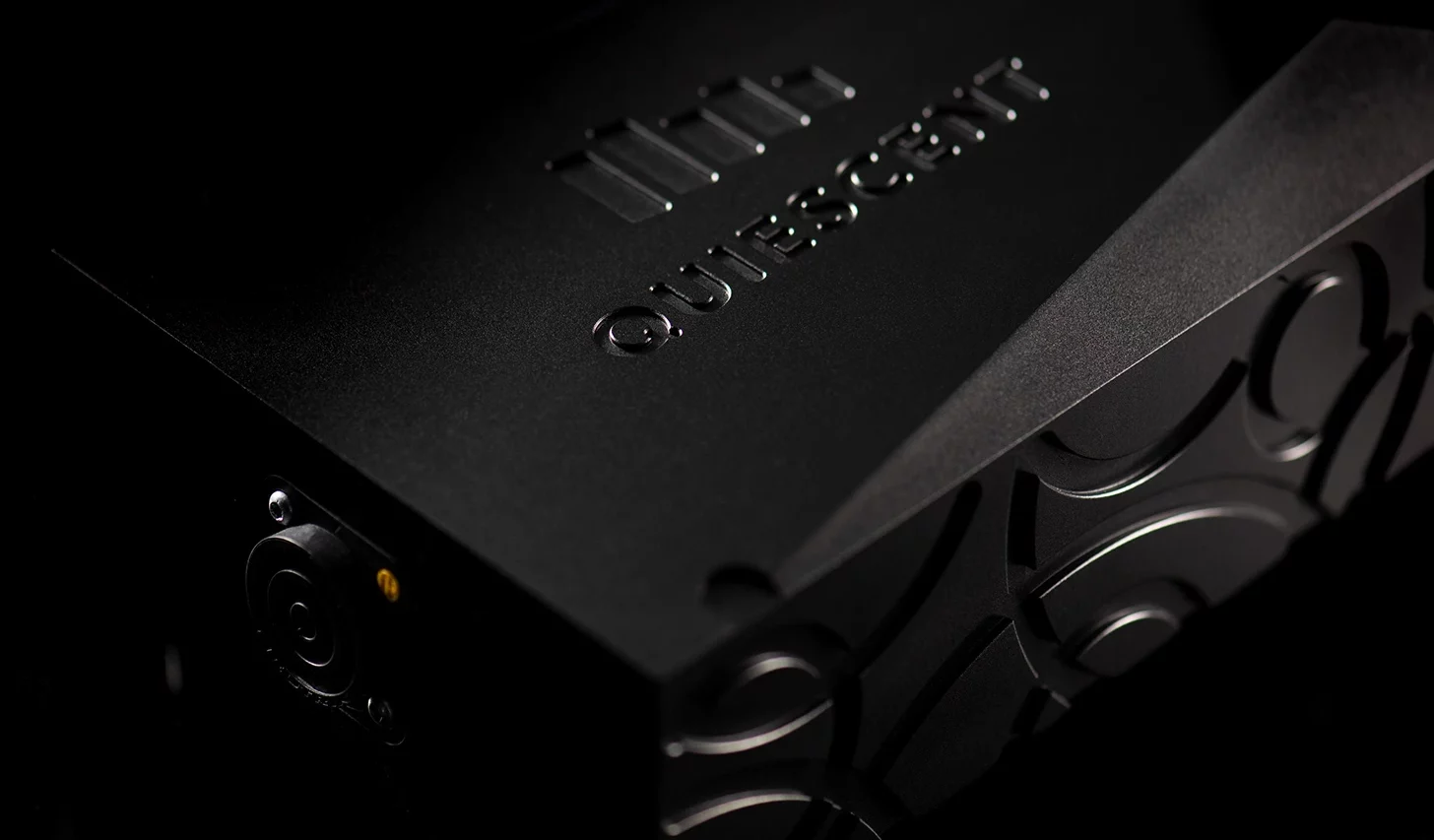
The Peak Mains Module is built around ultra-low-resonance solid aluminium casework and Quiescent patented EMI/RFI absorption technology. Single-output and dual-output versions allow individual components, or selected component pairs, to be treated within a controlled mains loom.
Internal solid-silver conductors, low-resonance casework, and proprietary absorption materials are specified for electrical and mechanical behaviour and for how high-frequency energy moves through the product.
Controlled paths through the mains loom
The mains as a shared environment
The mains is not simply a source of power. It is also a route through which high-frequency electrical noise, ground disturbance and mechanical vibration can move between products.
Audio components also generate disturbance of their own. Rectifiers, displays, digital clocks, control circuits, and power supplies can return high-frequency energy into the mains loom, where it may reach components that handle very small signals.
The Peak Mains Module is designed around this reality: the mains connection is part of the audio system, not just a utility feed.
Where components interact
At high frequencies, cables, power supplies and connected components behave as an interconnected network. Energy can travel in more than one direction. Where impedance changes abruptly, it can reflect rather than dissipate, allowing resonances and standing-wave behaviour to develop inside the mains loom.
These effects are small, but they occur in the same environment that carries the conditions from which musical detail is recovered. The objective is therefore not simply to filter the incoming mains. It is to reduce the interaction between the components connected to it.
Matrix absorption rather than reflection
The Peak Mains Module uses Quiescent patented Matrix technology to give unwanted high-frequency energy a controlled route into absorption.
Its behaviour can be understood through two complementary measures. Return loss describes how little unwanted energy is reflected back into the mains loom at a Matrix boundary. Insertion loss describes how much is reduced as it passes through the Matrix, rather than continuing onward.
When reflection and onward transmission are both reduced, less disturbance is available to recirculate between connected components. Each additional Peak Mains Module adds a local absorption point close to the components that create or receive that disturbance, rather than relying on one central treatment point.
For the wider system view, The Physics of Quiet explains why Quiescent considers power, grounding, cables, speaker connections and amplification as parts of one interconnected noise environment.
System result
<.p>Peak is designed not to impose a character on the system, but to reduce the mechanisms that obscure it.
As unwanted interaction falls, low-level information becomes easier to resolve. Instrumental separation improves. Vocals gain focus and presence. Dynamics emerge with greater ease, while timing and tonal relationships become more coherent.
The change is one of removal rather than addition.
Part of a complete mains-control system
The Peak Mains Module can be used alone, but it becomes more effective when treated as part of a wider Quiescent audio mains-control system.
Peak Mains Modules address the series path feeding individual components. Peak Shunt Modules work in parallel, giving noise emitted into the mains loom a local path to ground and absorption. Q300VA Balanced Mains Block and T500VA Balanced Mains Control extend the same principles into balanced mains architecture.
Together, these products create a set of controlled paths around the system, giving unwanted electrical and mechanical energy somewhere quieter to go before it can influence the signal.
Specifications
Casework
Construction
Ultra-low resonance black anodised high-grade solid block aluminium casework (black anodised)
Dimensions (L x W x H)
240 x 150 x 75 mm
Weight
4.5 kg
Absorption Technology
EMI/RFI
Patented multi-phase, wide-bandwidth electrical and mechanical matrix
Mechanical
Proprietary casework design with 3D passive acoustic absorption materials
Connections
Power In
IEC C14 or C15 10A
Power Out (single)
Neutrik powerCon TRUE 1
Power Out (double)
2 x Neutrik powerCon TRUE 1
Power Out (shunt)
Not Applicable
Conductors
Six 1.25mm 99.9% solid silver conductors (2 each per Earth, Neutral and Live)