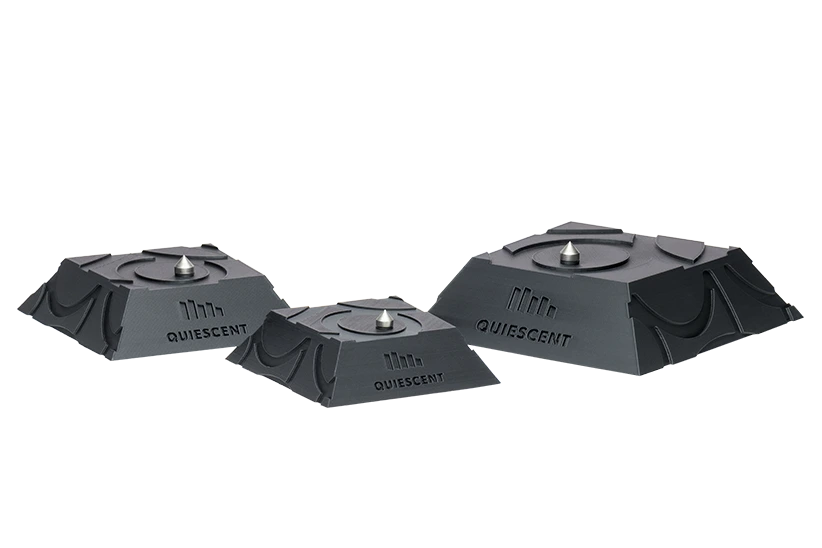
Apex Component Couplers
Apex Component Couplers are engineered supports for high-performance audio electronics. Each coupler provides a controlled mechanical and electrical path from the component chassis into a wide-band absorption matrix, reducing the high-frequency energy that can circulate through the ground plane and return into sensitive circuits.
Used beneath source components, streamers, DACs, preamplifiers, power supplies and amplifiers, Apex Component Couplers are designed to create a quieter foundation without imposing a character of their own.
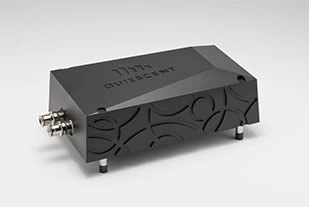
Previous
Next
Apex Component Couplers for quieter electronics
Conventional isolation is usually concerned with vibration arriving from outside the component. Apex Component Couplers address the energy generated inside the component itself: high-frequency vibration from transformers, capacitors, semiconductors and chassis structures, together with electrical noise that seeks the system ground.
Used in sets of three beneath each audio separate, the couplers create a defined contact between chassis and absorption matrix. The intention is not to tune the sound, but to reduce unwanted influence so timing, image focus, dynamic texture and tonal density can emerge with less strain.
A wide-band path away from the chassis
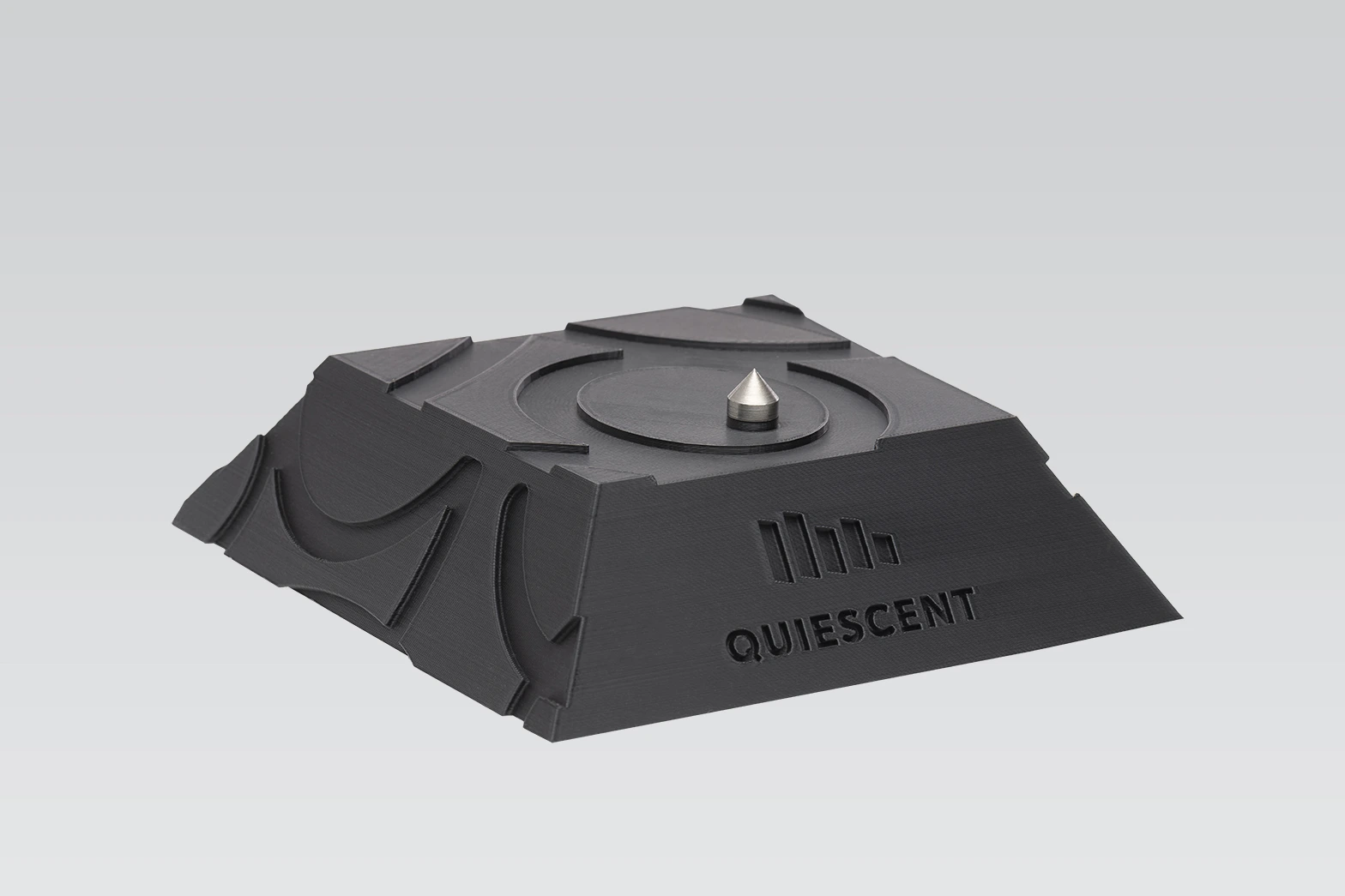
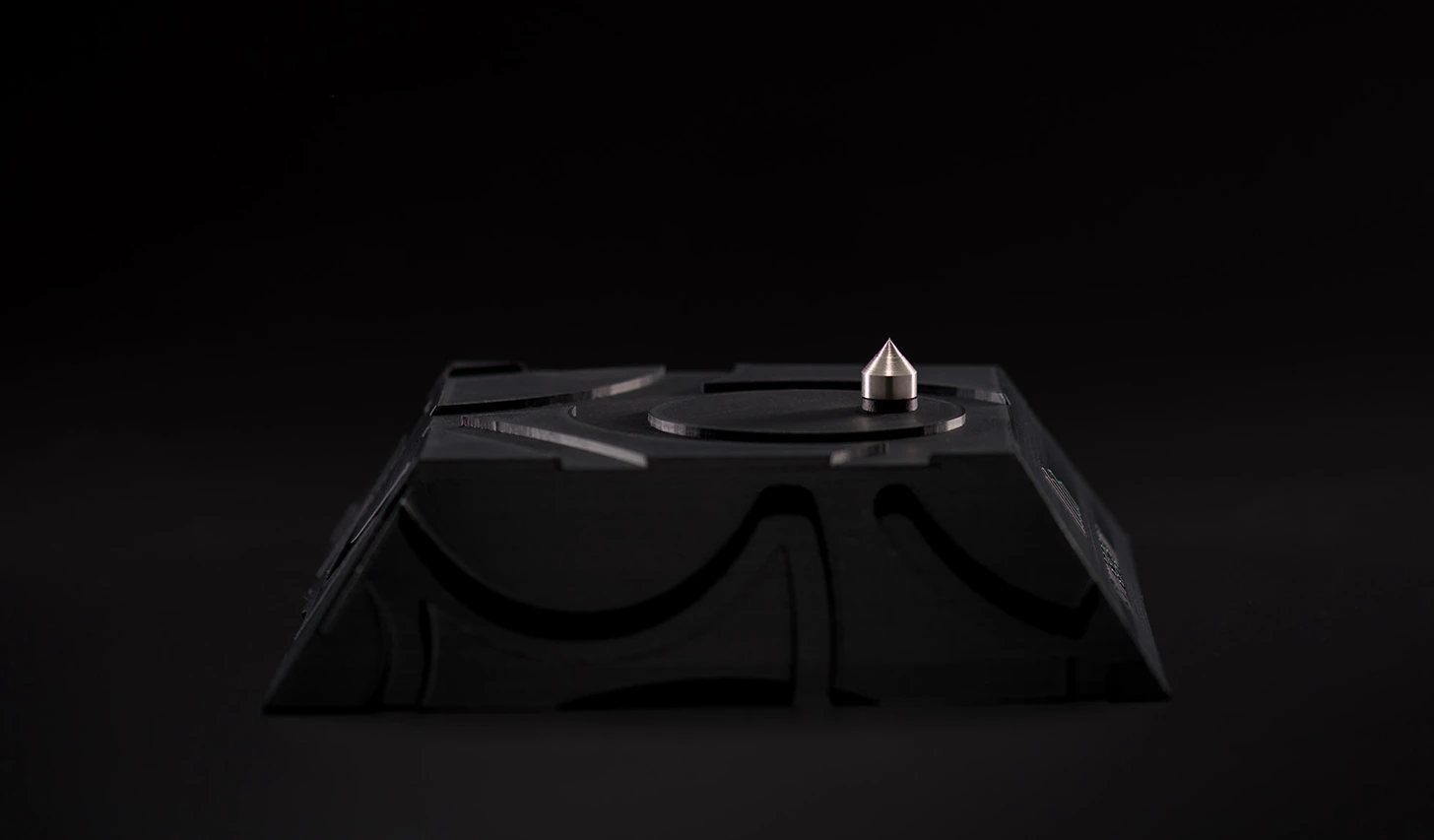
Each Apex coupler combines an irregular, non-parallel external form with a honeycomb internal structure and a proprietary wide-band, multi-phase absorption matrix. The stainless-steel spike provides a precise point of contact with the chassis, allowing mechanical and electrical energy to enter the coupler rather than continue circulating around the component.
This is the same design logic explored in The Physics of Quiet: create controlled paths for unwanted energy to be absorbed and dissipated, instead of reflecting it back into the system.
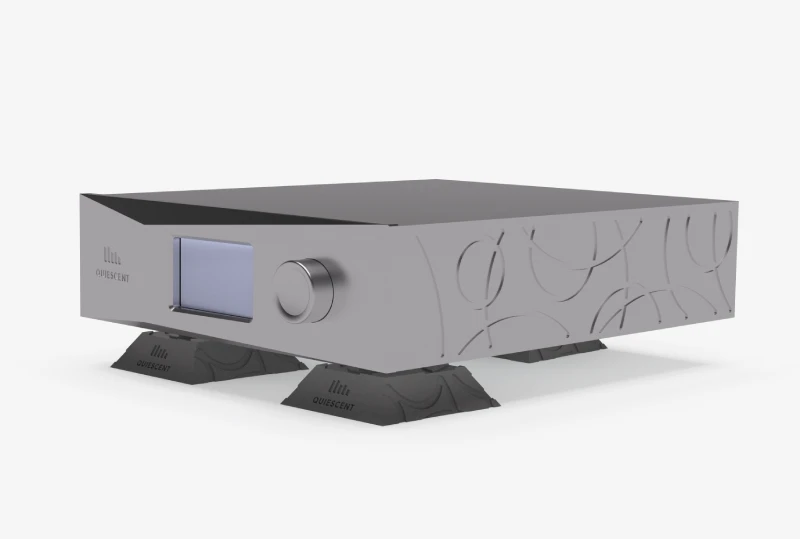
Three levels of Apex component grounding
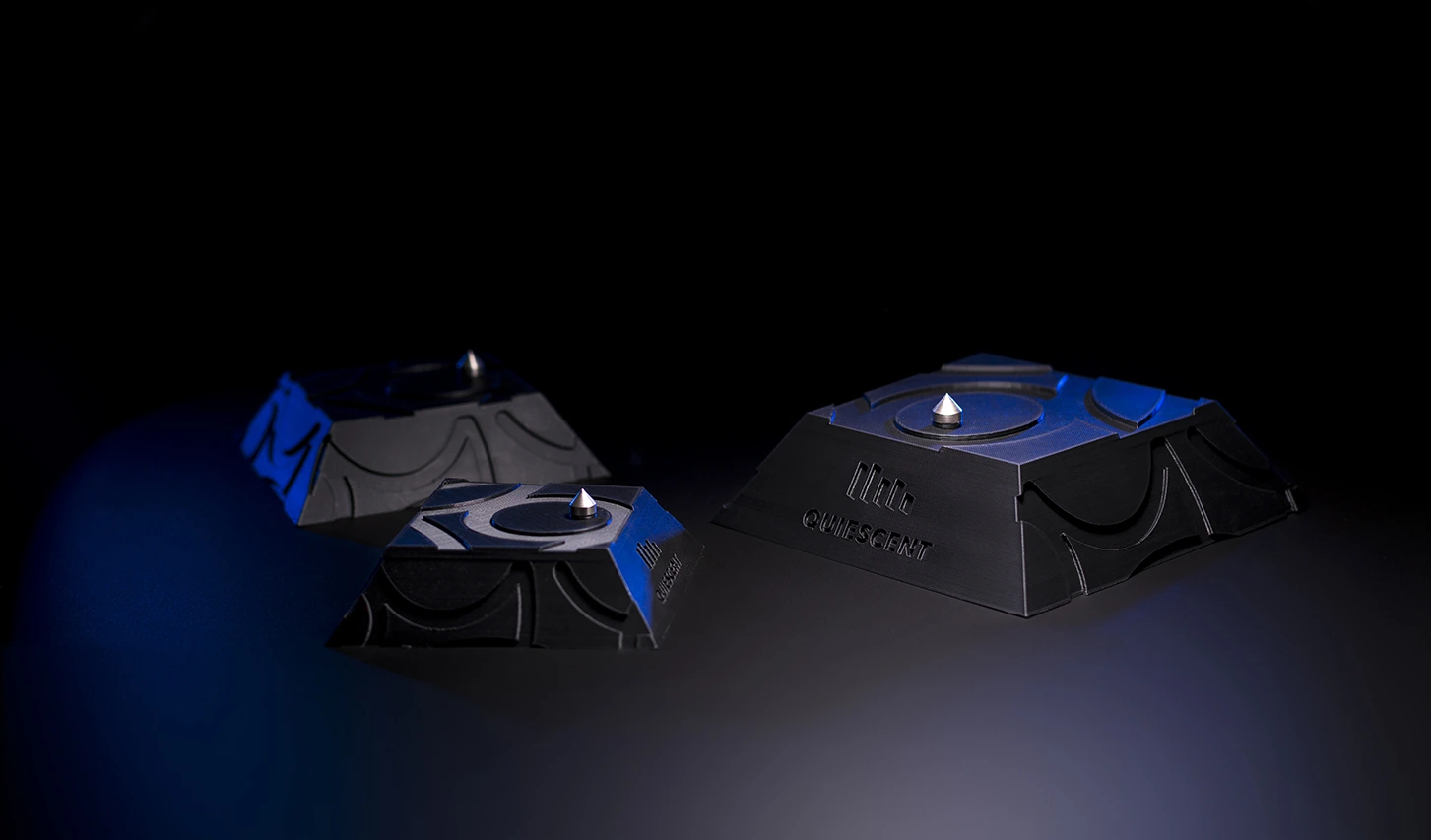
Apex Component Couplers are available as Apex40, Apex50 and Apex60. Each model uses the same underlying design principles, with increasing mass, contact area, load capacity and absorption capability as the range progresses.
Apex40 suits lighter source and control components. Apex50 is the balanced choice for many high-performance separates. Apex60 is designed for heavier power supplies, integrated amplifiers, power amplifiers and reference electronics.
The absorption factor shown in the specifications expresses this progression simply, with Apex40 as the reference point and Apex50 and Apex60 shown as increasing multiples of that capability.
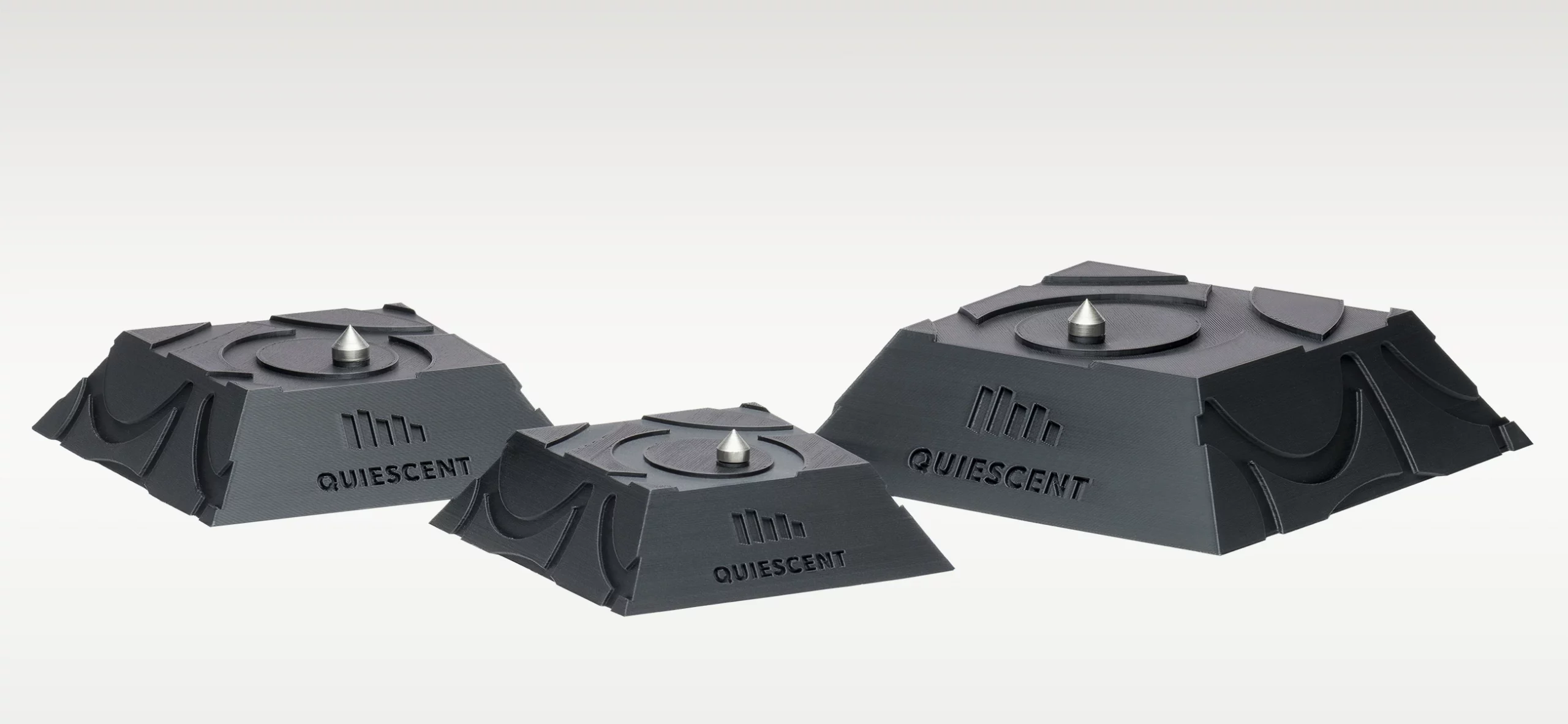
Component grounding, beyond ordinary isolation
The source of the problem
Many equipment supports are designed to isolate a component from vibration travelling through the rack or room. That can be useful, but it does not address everything happening inside the component itself.
Audio electronics generate their own high-frequency mechanical and electrical energy. Transformers, capacitors, semiconductors, circuit boards and chassis structures can all vibrate or resonate. Electromagnetic activity within the component can also induce circulating currents. Once this energy reaches the chassis and ground plane, it can remain within the system environment unless it is given a controlled path away.
Why Apex is different
Apex Component Couplers are not simple isolation feet. They are engineered as mechanical and electrical grounding devices for the component chassis. The low-acoustic-impedance stainless-steel spike creates a defined interface with the equipment. From there, energy is drawn into a deliberately irregular structure and wide-band absorption matrix.
The non-parallel faces, disruptive external surfaces and honeycomb internal geometry are used to avoid the coherent resonances common to regular cones, cylinders and blocks. Instead of allowing energy to reflect predictably back into the equipment, the Apex structure encourages a complex transmission path where mechanical energy can be scattered, opposed, absorbed and dissipated.
Electrical and mechanical absorption together
The same physical contact that couples vibration away from the chassis also provides an electrical relationship with the component ground. This matters because high-frequency noise that is not removed by conventional filtering can continue to move through the ground plane of a connected audio system.
Inside the coupler, Quiescent’s proprietary wide-band, multi-phase absorption technology works with EMI/RFI treatment to reduce the return of unwanted energy to the component. The purpose is simple: lower the noise field around the electronics without placing anything in the musical signal path.
What the listener hears
When chassis-borne energy and ground-plane noise are reduced, the component is less influenced by its own disturbance. Timing becomes easier to follow. Images are more stable. Bass has weight without overhang. Low-level information is less masked, and the system can sound more composed without becoming softened or editorial.
This is quietness as an engineering condition, not a tonal effect.
Choosing Apex40, Apex50 or Apex60
All three models use the same core design approach. Apex40 is the most compact option and is well suited to lighter source components, DACs, streamers and control electronics. Apex50 offers greater absorption capability and physical support for larger separates. Apex60 provides the highest level of absorption and load capacity for heavy power supplies, integrated amplifiers, power amplifiers and reference components.
As Jason Kennedy noted in his review for The Ear, the larger models extend the same behaviour rather than changing the nature of the product. The progression is one of capacity, scale and control.
Specifications
Understanding Absorption Factor
Apex couplers are measured as one-port devices, where return loss shows how much unwanted energy is accepted by the coupler rather than reflected back toward the component. That measurement is useful in development, but it is not an intuitive guide for choosing between models.
For this reason, Quiescent expresses the result as an Absorption Factor. Apex40 is set as the 1.00 reference. Apex50 and Apex60 are then shown as multiples of that reference, giving a simple indication of their increased absorption capability within the Apex range.
The larger models do not change the design principle. They increase the scale, mass and energy capacity of the same wide-band absorption approach.
EMI/RFI Absorption Factor
1.00
W x D x H (mm)
121x110x40
Weight per Coupler (g)
400
Maximum Load Bearing (kg)
45
EMI/RFI Absorption Factor
2.01
W x D x H (mm)
151x138x50
Weight per Coupler (g)
783
Maximum Load Bearing (kg)
65
EMI/RFI Absorption Factor
3.78
W x D x H (mm)
194x165x60
Weight per Coupler (g)
1,444
Maximum Load Bearing (kg)
85